“And, Along Came Slim …”

There was a lot that was “slim” about the pitcher Slim Love.
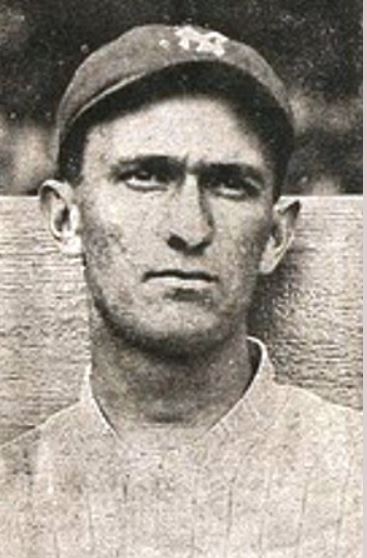
slim love photo

His frame was slim – 6 foot, 7 inches, 195 pounds. And, his baseball career (a few big league seasons between 1913 and 1920) was rather slim, too.

When I wrote about him a couple days ago (click here), I focused on this slimness, his mediocre statistics, and his only pitch, an undisciplined fastball.

Slim’s pretty short list of overall pitching stats (highlighted by an awful lot of walks) made for, well, slim pickings when it came to summing up his career.

But, he was the tallest man in major league baseball at the time and had a very good nickname. So I settled for that.

It could be said that I, an Orioles fan, was unduly hard on Love because he was a Yankee. OK, point taken.

The more I thought about Love, however, the more I thought, “If he was that mediocre, how did he make it through so many major league seasons?”

(You may insert any number of current mediocre pitchers in response here. I’m not going to play that game, but I will say – you do have a point.)

So, I poked around some more. And, I stumbled on something. And, when I say “stumbled” I don’t mean literally, but I came upon it nearly by chance. As if Slim Love himself had steered this newspaper under my nose, controlling his legacy in a way that he couldn’t his fastball.

Slim, I think, wants you to know about this.

Slim vs Babe story

New York Tribune, 6/27/18. Library of Congress, Public Domain http://chroniclingamerica.loc.gov/lccn/sn83030214/1918-06-27/ed-1/seq-12

Wednesday, June 26, 1918

New York Yankees vs. Boston Red Sox

“And along came Slim Love and Babe Ruth was shackled.” (New York Tribune)

Love was a Yankee, Ruth was still with the Red Sox.

Slim vs Babe

New York Tribune, 6/27/18. Library of Congress, Public Domain http://chroniclingamerica.loc.gov/lccn/sn83030214/1918-06-27/ed-1/seq-12

Slim Love Pitching for the Yankees. June 26, 1918

Love gave up only three hits in his 3-1 victory that day, bringing the Yankees to within a game of the league-leading Sox.

Slim Love’s own two RBI double was the difference in the Yankees’ victory. “It was a lovely hit and the 6,000 howlers in the stands howled their OK,” wrote Charles Taylor of the Tribune.

As for Babe Ruth?

Babe_Ruth_Red_Sox_1918

Public Domain image.

Babe Ruth, Red Sox. 1918

Being “shackled” meant Ruth went just 1-for-4 that day; his one hit a double that drove in the sole Red Sox run. Which, isn’t really shackled by my accounts, unless, of course, you’re Babe Ruth and much more is expected of you than of ordinary batters.

But, this is Slim’s story.

And, Love, Taylor wrote, “had a lovely day. His old southpaw wing never fluttered so gracefully or with better results.”

(There’s no baseball writer – or baseball blogger – today who could write a line like that, and that’s a shame.)

Every ballplayer – at every level of the game – deserves at least one great moment.

Every batter deserves a 4-for-4 game, or a home run that cuts through the clouds and breaks someone’s windshield, setting off a line of car alarms in the parking lot.

Every batter deserves a Babe Ruth kind of day.

Every pitcher deserves one no-hitter (and Love did have one of those in the minor leagues).

And, every pitcher should be given a moment when their pitches are so spot-on perfect that they would shut down Babe Ruth himself.

Every pitcher deserves that Slim Love kind of day.

POSTSCRIPT: The Red Sox went on to win the World Series that season (defeating the Cubs). They would not win another World Series for 86 years. The Yankees, with a 60-63 record, sunk to fourth. In December 1920, the Red Sox would sell Babe Ruth to the Yankees for $100,000, which kick started a Yankees’ revival that has led, over the years, to 27 World Series championships.

FUN FACT: Slim Love and Babe Ruth were – very briefly – teammates. In December 1918, the Yankees traded Love to Ruth’s Red Sox. But, before Spring Training or a single game with the Sox, Love was bundled up yet again and traded to the Tigers.

Slim Love ~ A Valentine’s Tale

Slim Love was a pitcher.

(I’m not clever enough to make this up. This story is true.)

slim love photo

public domain image.

This is Slim.

Slim wasn’t his given name, of course.

His birth name, given in 1890, was Edward.

But, baseball is the land of a thousand nicknames. And, while “Slim” isn’t the best of them, it certainly isn’t the worst, and it’s appropriate enough if you’re a lanky, stringbeany, beanpoley, 6 foot 7 kind of fella.

In 1913, as a member of the Senators, The Washington Post called Love the “elongated twirler” with a “bucolic disposition and odd appearance.”

Today, just calling him tall would do.

To be 6’7” is to be pretty tall, but not as tall as Jon Rauch (6’11”) or Randy Johnson (6’10”).

But, to be 6’7” in 1913 is to be the tallest man in the major leagues.

slim love

public domain image.

Slim Love. All 6’7″ of him.

(Fun Fact: The tallest players in major league baseball are all pitchers.)

Slim Love is the perfect-ish name for Valentine’s Day.

It’s sweet with the Love part, but Slim makes the love seem a bit stand-offish and tenuous. A slim love is fragile. It’s a complicated love. Tender, but a little bit sad. Still, it’s a good name.

(Unconditional love is what you get from a dog.  Slim love is what you get from a cat.)

Stevie Grumbles

Even Stevie’s love is slim at times.

Slim Love wasn’t a spectacular pitcher. He isn’t particularly memorable at all.

But, baseball historians are a fair-minded lot and they remember everyone.

Love, apparently, bragged his way onto a minor league team in Memphis, while having, apparently, no real baseball skills.

I thought this was fairly remarkable and quite a lucky break for Slim, and assumed perhaps that this was merely a sign of how baseball behaved in a far simpler time.

Then I realized that idiots in all walks of life brag themselves into jobs they are unsuited for all the time and I find them, as a group, highly annoying.

Slim Love must have figured something out, however, because he eventually played a few big league seasons with the Senators, Yankees, and Tigers.

1918 yankees team

public domain image

1918 New York Yankees. Slim Love is in the middle (kneeling) row, second from the right.

He had an undisciplined fastball and never learned – or just couldn’t – throw a curve or anything else for that matter, despite the futile efforts of Yankees manager Miller Huggins to teach him a new pitch or at least some control.

His major league career was finished by 1920 at age 29. He ended with a 3.04 ERA and a 28-21 record (most of that with the Yankees), which isn’t all that special, but could still land you a job today in many bullpens, if not in a starting rotation.

slim love zeenut

Slim Love even had his own baseball card.

He kicked around in the minor and independent leagues into the 1930s. He died in 1942 in Memphis, at age 52, after being struck by a car.

Love Gravestone

There’s no moral to Slim Love’s tale.

Only that there are plenty of players in baseball who may not have been very good, but were a little bit interesting, or just a touch quirky.

Maybe just their name will stand the test of time.

Or, maybe not. In reporting on his death in 1942, The Sporting News got his name and age wrong. They called him Elmer.

elmer

The Sporting News. Dec. 10, 1942

The Slim Love story doesn’t end quite yet. For Part 2, and the day Slim Love faced Babe Ruth, click here.

Happy Baseball. Pitchers & Catchers report this week. Finally.

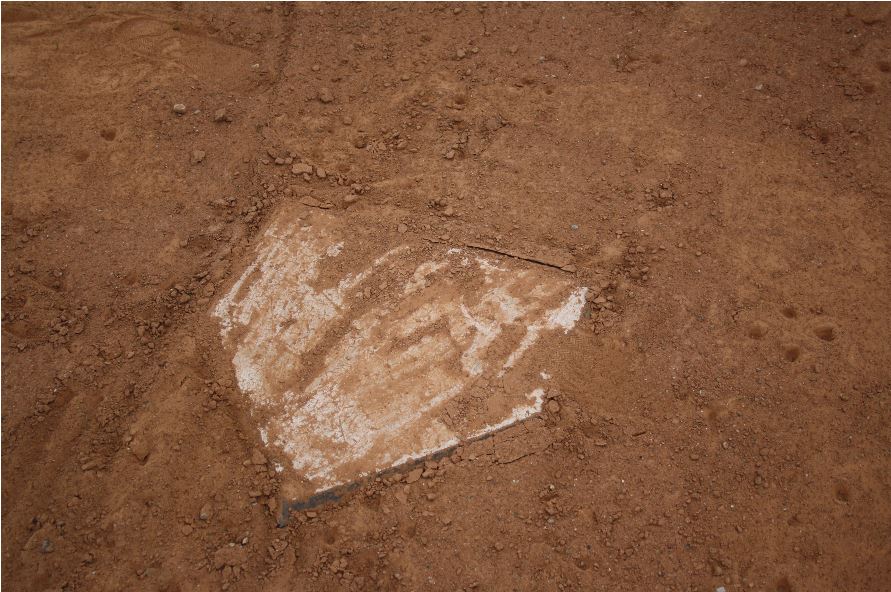
There’s No Plate Like Home.

Back in the day, baseball’s home plate was often a perfectly round – and, later, a perfectly square –  chunk of marble. Iron or wood would do in a pinch. Or, a hunk of anything, really, tough enough to withstand baseball’s roughhousing 19th-century games.

The Dodgers’ broadcaster Vin Scully explained the history of home plate during a game last season. Listen here.

vinhome

Home plate is, technically, called “home base” but rarely is it called that, in the same way that the Cincinnati Reds are rarely called the “Red Stockings” even though that is their name. Technically.

Should you wish to build your own 21st-century home plate, you will forgo the marble (and the round and the square). Instead, find yourself a nice piece of white rubber and carefully carve it into a 20-pound pentagon.

Emphasis on “carefully.” Because home plate’s dimensions and placement are very, very precise.

home kingofears

Image Used with Permission By Kingofears via WikiMedia Creative Commons.

(Explicitly precise dimensions in the infield surrounded by decidedly imprecise outfields is what makes baseball a perfect game.)

The pentagon shape was settled on in 1900 to help umpires better see the strike zone.

(You may insert your favorite umpire joke here. Or, try this one … Why are umpires so fat? They always clean their plates!)

Thank the 1880s Baltimore Orioles for the creation of a home plate made of rubber.

(Thank you for home plate, Orioles. Oh, and while I have you, where’s that ace starting pitcher you’ve been promising us?)

orioles 1896

1896 Baltimore Orioles. Public Domain Image.

(Purist Alert: These 19th-century Orioles do lead to the rubber home plate, but they didn’t really evolve into today’s Orioles. They also did not evolve into the New York Yankees – a later, traitorous 1901 Orioles’ incarnation did that.)

The rubber home plate was the invention of lefty pitcher Robert Keating, who pitched one big-league game for the Orioles in 1887.

Keating’s one-game career was rough – a complete-game loss that left him with a career 11.00 ERA.

Apparently, Keating knew his baseball days were numbered, and that same year he patented one of many dozens of inventions that he would create during his lifetime – a much safer rubber home plate to replace the stone and iron ones that often led to injuries.

Keating is rarely remembered for this important contribution to baseball.

Instead, he is best known for the Keating Bicycle, a “safety bicycle” which had front and rear wheels that were the same size. This was an alternative to the dangerous big front-wheel numbers that people seemed all crazy for in the 1880s.

keating bicycle

(Keating, apparently, was a “safety first” man – a safer home plate, a safer bicycle, and he also invented an early version of the “safety razor.”)

Keating fans will also tell you he invented the first motorcycle in 1901, a full year before it was “officially” invented by someone else.

But, back to baseball. Here’s what you should know about home plate.

* It may have informally been called “home” before then, but it was the famed Knickerbocker Rules of 1845 that formally named the base where a batter swings and a runner scores as “home.”

knickerbocker rules

* Major League Baseball’s rules “suggest” that home plate be positioned in an “East-Northeast” direction.

This is to accommodate batters during sunny day games. Of course, most of today’s baseball is played at night under lights – or indoors – so it’s much less important. Still, rules are rules, even when they’re just suggestions, and you’ll see that many modern ballparks still properly place home plate to the east-northeast.

* Modern-day rubber home plates are durable, sure, but they’re no marble. Today’s major league teams will usually wear through two home plates each season (they’ll bring in a fresh plate around the All-Star Break).

Minor league teams will often squeeze a couple seasons out of their home plates.

(Bulldog Field Equipment, based here in Virginia, supplies home plates and pitching rubbers to many major- and minor-league teams. Their “double-sided” plates weigh 40 pounds and can be flipped over to increase their lifespan.)

* Umpires have their own very specific rules for the care of home plate. They will dust it with a brush before each half inning and whenever needed. The umpire will step to the front of the plate, turning his back to the pitcher’s mound before dusting, so as not to moon the fans when he bends over. Players don’t dust off the plate. Ever.

umpire brush

* Whether rubber or marble, it’s not easy to steal home, which makes it one of baseball’s rarest and most exciting plays. Detroit’s Ty Cobb stole home 54 times in his career – the most of any ballplayer.

On those few occasions when a runner on third attempts to steal home, this is what almost always happens:

wieters2

He’s Out!

But, once in awhile, this happens:

Jackie Robinson stole home 19 times in his career, but, to this day, catcher Yogi Berra insists that Robinson was out during this famous play during the 1955 World Series.

Berra told Sports Illustrated in 2009, “The ump never saw the play good. … He was short and never got out of his crouch. The hitter even admitted later that Jackie was out. And he had a great view.”

Asked what he remembered most about one of baseball’s most famous plays, Yogi says, “Mostly, I remember he was out.”

(Special Thanks to Jason Grohoske & Steve Ruckman of the Double A Richmond Flying Squirrels who answered my questions about the life span of modern day home plates. Go Squirrels!)

(Much of the information on Robert Keating is from the fine research of Daniel E. Ginsburg of the Society of American Baseball Research. Find more here.)


More of my posts on the evolution of “home”:

Skizzle, Sweet Skizzle

Don’t Try This At Home

Don’t Try This At Home

Ty-Cobb-hard-slide

Ty Cobb goes “spike’s up” into home. Navin Field, Detroit (1912 or 1913). Public Domain image.

Don’t try this at home.

Because it is stupid. (“It” being Ty Cobb’s collision. My pun, on the other hand, is brilliant.)

As a baseball-writing massage therapist with nearly 10,000 massage sessions under my belt, I’m often asked for my thoughts about home plate collisions.

Actually, no one’s asked.

But, I’m going to tell you anyway.

Because I’ve been thinking a lot about home plate ever since my last post.

And, because one doofus said on his webpage (which has approximately a zillion more readers than I ever will) that banning home plate collisions is further proof of the “wussification of America.”

And, all I could think was, “Good god, how many times has Glenn Beck’s head collided with the sidewalk? Because he sure sounds like he’s brain-clunked pavement a few too many times.”

Glenn Beck doesn’t know what he’s talking about.

But, I do.

I know collisions. I see colliders every day. Colliders are my massage (and Yoga) bread and butter.

I have clients who have collided with other people, with airbags, with telephone poles, with staircases, with the ground (woody, gravelly, asphalty, rocky, and cementy.) I see clients who have broken things, strained things, torn things, ruptured things, and gotten their bells rung.

I sometimes see them a day after they have collided and often for years afterward.

I see equestrian clients who are tossed off of their horses so often that you would think their bottoms are loaded with crazy Wonderland-like springs that catapult them randomly through the air and into rocks and bramble. Over and over.

I have clients who live with chronic pain and permanent injuries and brain impairment because they collided into something – or someone – else.

I know colliders.

So, I am delighted that Major League Baseball is taking the necessary steps to ban home plate collisions – where a base runner coming home seeks to dislodge the ball from a catcher’s mitt by violently colliding with him. That’s how the Giants’ Buster Posey broke his leg in 2011. And, that’s how many professional ballplayers sustain debilitating concussions throughout the season.

Home plate collisions are needlessly dangerous, unnecessary, and just plain stupid.

Former Catcher and now St. Louis Cardinals Manager Mike Matheny retired in 2007 following a series of concussions caused by home plate collisions. He lost 18 months of his memory as a result. If I haven’t convinced you, listen to him, click here.

matheny

Baseball’s owners and the players’ union are still working out the details and wording, but the belief is that new rules could be in place by the start of this season or 2015 at the latest.

ESPN’s Buster Olney (who has so many “insider” sources, he probably knows someone who has spilled all your secrets), was told that the new rules would include:

• Catchers cannot block home plate.

• Runners will not be allowed to target the catchers.

• Umpires will determine whether or not the plate was blocked or the runner targeted the catcher and this will be a reviewable call, and

• Players who violate these rules will be subject to disciplinary action.

This won’t eliminate all collisions. But, it will eliminate some extremely violent home-plate encounters.

In its very earliest long-time-ago incarnations, baseball required a runner to be struck by the ball in order to be out. Yes, just like dodgeball you would throw the baseball at the runner – as hard as you could and sometimes right at his head. If you severely maimed him in the process, well, hey, it was the 18th century, he probably wasn’t going to make it to 40 anyway.

But, that was stupid. And, baseball improved its rules.

The rules already protect fielders from collisions by base runners who seek to break up double plays through collision or “spikes up.” (Interference is called on the base runner and he is out.)

A sprained ankle might slow you down for a week or so. A concussion is much sneakier and can cause permanent brain damage that you won’t notice until one day you’re standing in a grocery store and you wonder, “Why am I here?” (And, not in an existential way, either.)

Watch the PBS Frontline documentary League of Denial that shows, in grim detail, the heartbreaking damage that concussions have done to professional athletes. Watch it here.

league of denial

Glenn Beck, apparently, thinks that baseball rules are unnecessary (in the same way that he believes that government is unnecessary, until the potholes on his street need fixing).

Life has risks. Games have risks. Jobs have risks.

I know that.

But, that doesn’t mean that an employer doesn’t have the responsibility to try to eliminate risks whenever possible.

A bakery gives its baker an oven mitt so he doesn’t melt the skin off his hands when he pulls the bread out of a hot oven.

A warehouse puts brakes on its forklift so a driver doesn’t run over his colleague who is stacking boxes.

Baseball stops home plate collisions.

Good heavens, why are we even debating this?

I’m guessing Ty Cobb, like Glenn Beck, would say that minimizing injuries is a wussy thing to do. (Although, honestly, I don’t think Cobb would use the word “wussy.”)

But, tough. And, stop whining.

Those nasty spike’s up, knock-em-down, slasharoos that Ty Cobb made famous are stupid. (Say, Ty, maybe if you picked up the pace a bit coming in from third you could have beaten the throw to the plate. Now THAT’s exciting baseball!)

Just 25 days until pitchers and catchers report.

By: Frettie, used with permission via Creative Commons 3.0

By: Frettie, used with permission via Creative Commons 3.0

Skizzle, Sweet Skizzle.

The bases in baseball might have been imagined in the 19th century, but their beginnings were probably much earlier than that. Historians often reach back to the 18th or even 17th centuries to find something undeniably baseball-ish about the games children played.

(Historian David Block can take it all the way back to 1450.)

(There are a lot of very good baseball historians in the world today. You could probably fill Wrigley Field’s bleachers with them and have to pour the overflow historians into Fenway. Football historians, on the other hand, can easily be transported in a minivan.)

Bases are the grail for many historians. If a game had you run to a specified point or “base,” you were probably playing some form of baseball.

But I think if they were inventing baseball today, there would be no “Home.”

Oh, the base would be there … the plate, the dish, it has a few different names. The umpire might still ceremoniously dust it off with a whisk broom from time to time, and it would still be 60 feet 6 inches from the pitcher. But, I don’t think we would call it “home.”

We might call it a Blast Pad, a Stamping Stone, or the Swat Zone. Those all sound cool, right?

Or, more likely, we’d just make up a word. The Skizzle! The Bagzooka! The Scoreatorium!

(God, I’m bad at this.)

Two minutes of Blast Pad Bliss!

But, surely not “home” … which conjures up images of the kindness of mom and cookies and soup and underwear hanging on the line.

And, unlike baseball, the place in life where you start and then you end isn’t always the same “home.”

I’m not even sure I know what a hometown is. Is that where I was born? Where I grew up? Or, where I’m living now? Because I can call each of them “home.”  And, they are all quite different places. (The ocean is on the other side now.)

I don’t really remember much about where I was born.  We moved when I was still mini-sized. (I was born in the same hospital as Robin Ventura, by the way. So I’ll always have a little hometown kinship with him. And, I never liked Nolan Ryan.)

Then we moved to another part of California. And, when I was old enough, my dad taught me about “home teams.” And, since we lived near the Bay Area, I became a Giants-A’s-49ers-Raiders fan.

(It really stinks being on a football boycott when the 49ers are doing so well. Or, leastways, that’s what I’ve been told.)

My dad schooled me in football. My little-girl baseball knowledge pretty much boiled down to ranking the players on my baseball cards on a highly precise and carefully researched Cutie Pie Scale. (Oakland A’s? Very cutie pie.)

I showed flashes of home team spirit, as seen here when I firmly and sadly crossed “GIANTS” off of my Willie Mays’ card when he went to the Mets.

willie mays card

Even then, I was conflicted by what home means. If Willie Mays was no longer a Giant, what was the point? What good is having a home, if no one is going to stay there?

Then we moved.

(Please enjoy this brief interlude as I spend nearly 10 home-team-less years in North Dakota.)

The East Coast, above-zero temperatures, and my very first real live baseball game couldn’t come fast enough.

I tell this story a lot, and it is true. When I stepped out of the cement walkway and into the upper deck of Baltimore’s Memorial Stadium for the very first time, I saw the green grass and the diamond spread out before me.

And, I looked, and I said to myself, “I’m home.”

So, maybe the Orioles aren’t technically my “home” team, since they’re 126 miles – and lots of traffic – away. Does it matter anymore where you actually live? Or, do we define home differently now?

Baseball players, themselves, are nomads. They are shuttled around from team to team, town to town. There are few Cal Ripkens left out there who get to play every day for their own hometown team.

Home plate may be the only “home” a player can count on during his career.

(And, woe to the American League pitcher who only gets a look at “home” and never gets to actually go there.)

Fans have cable and the internet and can watch any game from practically anywhere in the world. Live.

I can listen to Vin Scully call a Dodgers game thousands of miles away. Jon Miller, who I missed for so many years, now comes through loud and clear calling Giants games on my Sirius Radio.

Anywhere can be home. And, if anywhere is home, maybe home isn’t the same thing that it once was.

In baseball, home is where you start and where you hope you end up. You’ll run around for awhile, but, if all goes well you’ll end up again at home, right where you started.

In baseball, that’ll earn you a run.

In life, I’m not sure what that gets you anymore. Sometimes, if you end up back at home – to sleep, perhaps, in your parents’ basement – it’s because things haven’t quite worked out so well in life.

I think my home is right here, right now. With my Editor/Husband, the bushel of cats, and the brand-new barn (and unfinished porch). I like coming home. To here.

Skizzle, Sweet Skizzle.

good morning barn2

Baseball Free …

??????????

Things I’ve learned in the past three baseball-less weeks.

Did you know it only takes four seconds to put the toilet paper roll on the hanger in the bathroom?  I had forgotten that that’s what that little wall bracket thingy is for. Did you know that you can do that every time you start a new roll?

Now, with no baseball to watch, I suddenly have all sorts of time to do the things that I haven’t done for awhile.

Like catch up on my People magazines.

??????????

Have you heard the news? Kim and Kanye are getting married! Ahhh, precious young love. So sweet and pure and true.

(Dear San Francisco Giants, you should be ashamed … whoring out AT&T Park like that. But, don’t worry, Hunter Pence, I still love you.)

Hunter Baseball Camp2

“If you wanna be a Hunter’s Hitter, you’re gonna have a lot of movement. Like a hungry man chasing a taco.”

(Really, you must watch this. Now. I’ll wait.)

And, tidy up the workplace.

These linens don’t wash themselves.

??????????

(Warning To Future Massage Therapists: This is three days’ worth of laundry. They don’t tell you about this in Massage School, do they?  Yeh, happy folding, Sucker.)

And, look what happened while I was watching baseball … the barn is finished!

good morning barn2

And, in fairness to Barn Dude, he did finish it before the World Series, just as he promised. (Hey, Barn Dude, are you reading this? I still need a shelf in there!)

Cold, heavy rain all last night. It’s clearly not baseball season anymore. So, I was just about to count the days until Pitchers and Catchers report (78) when this Tweet from Jaye popped up.

jaye tweet

I only have a few Twitter followers, and most of them are obscure overseas marketers trying to sell me something – like saris. Apparently, I’m the only Yoga teacher who doesn’t wear a Sari.

(But, I’ll wear a Sari before I’ll ever wear Lululemon.)

Jaye is a blogger, too. And, a really good one … read her, ok?

Her Tweet reminded me that I hadn’t written in awhile. Mainly because what is there to say on a baseball blog when there is no baseball?

The bulk of off-season baseball stories are about players seeking tens of millions of dollars.

(Which is better than stories about players being bullies. So, there is that.)

Or, the Washington Nationals asking the D.C. government to give them $300 million for a retractable roof.

Which leads me to these points.

Point #1. If you can’t play baseball outside, then maybe you shouldn’t be playing baseball. (Florida and Arizona, you have Spring Training … ALL the teams are there every spring.  And, you have the Fall League! Isn’t that enough for you?) And, Houston Astros, if the Texas Rangers can play outside, why can’t you? (And, Toronto, Seattle, Milwaukee? Oh, never mind …)

Point #2. Really, Nationals? A retractable roof is going to put you in the playoffs? Why not spend $300 million on Robinson Cano? Or, two Carlos Beltrans?

Editor/Husband says that $300 million for a retractable roof seems reasonable to him. (This conversation really happened: Me: “Hey, you can have 30 Jim Johnsons for that.” He: “If only he were retractable.” “I don’t know what that means.” “I don’t either.”)

Point #3. The Mayor laughed at the Nats’ request. Laughed. And, someone in his office said the roof would be “butt ugly.” So, uh, I guess that means no roof?

Point #4. Editor/Husband says my stubbornness about indoor baseball is similar to the outcry over lights at baseball parks and the first night games. The first major league night game was in 1935. (He remembers this? Editor/Husband is much older than I thought.)

??????????

Lights. Clouds. Sky.

Things I’m thankful for this Thanksgiving? Just 78 days ’til Pitchers & Catchers report.  Happy Thanksgiving!

4th of July Baseball!

“[I]t is good to see health-promoting exercises taking the place of insipid enervating amusements.” ~ The Washington Star reporting on a baseball game in Washington, DC in 1860

Oh, Washington Star, you have no idea.

No idea what “insipid enervating amusements” your great-great-great-great grandchildren will come up with. No idea.

We name our children North West, for heaven’s sake. You really have no idea.

But, you’ll be pleased to know that baseball is pretty much the same.

(Sure, some teams play indoors on fake grass, some under glowing swaths of electric lights, and some won’t even let their pitchers come to bat anymore. Players come from all over the world. And, it’s no longer a whites-only game. So, ok, times have changed a bit.)

While baseball’s beginnings go back much further, it was the Civil War that helped turn baseball from a regional, neighborhood pastime – complete with myriad, often vague, sets of rules – and into a pretty standardized game.

baseball with union prisioners 1863 salisbury nc

Baseball game between Union prisoners at Salisbury, N.C., 1863. Lithograph of a drawing by Maj. Otto Boetticher. Courtesy of the National Archives

That game, base ball, helped pass time during wartime and was taken home across the nation into peacetime.

andrew johnson

President Andrew Johnson

It’s said that President Andrew Johnson was the first sitting President to watch baseball games during the 1860s.

“Johnson indulged few recreational activities [but] he came to appreciate baseball, which was well on its way to becoming America’s past time. On occasion, the President took time to watch pickup games organized on the South Grounds of the White House,” according to Jeffrey K. Smith in The Loyalist: The Life & Times of Andrew Johnson.

(Thank you to my friend Gloria, a diehard Cubs fan, who actually read that book and brought the baseball quote to my attention. And, thank you to my Editor/Husband who said it was also important to mention that then-Vice President Johnson was drunk at Lincoln’s second inauguration.)  

By the 1920s baseball’s place in our nation was clear. It was, President Calvin Coolidge declared, “our nation’s game.”

All 30 major league teams are scheduled to play today … all decked out in the stars and stripes.

Each team will wear special “Independence Day” caps.

Like the Baltimore Orioles.

os stars stripes

And, the New York Yankees. (I am sharing the Yankees cap with you so I can take this opportunity to report that the Orioles swept the Yankees last weekend. Go O’s!) yankees stars stripes cap And, the Cleveland Indians. indians stars stripes cap Wait. That can’t be right, can it?

Yes, Major League Baseball apparently thought it would be appropriate – possibly even cute – to paint Chief Wahoo in the stars and stripes. I’m not even comfortable writing this.

But, hey, MLB, we all make mistakes. And, so, here’s the new Cleveland cap you’ll see today.

final cleveland stars stripes

There. That’s better.

And, if you’re a Toronto Blue Jay? Fear not, no stars and stripes for you today. Your maple leaf is quite fetching!

blue jays stars stripes

So, tip your cap today to the sport that is our “nation’s game.” Chances are, you’ll be tipping a baseball cap (but hopefully not that Chief Wahoo one).

And, have a happy Fourth of July!

“Cheesy Garlic All Stars”

Here’s what I can tell you about American voters.

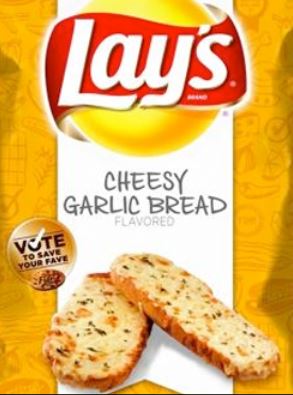
We’re the country that brought you Warren G. Harding and Taylor Hicks. We’re the country that decided that Cheesy Garlic Bread is a better potato chip flavor than Sriracha. I kid you not, Sriracha lost. What is wrong with people?

cheesy garlic

So, voting aptitude is probably not our strongest suit as a nation.

(Really, America, you chose BREAD as a potato chip flavor!)

On Friday I posted my belief that a baseball All-Star should be based on something more than just numbers and on-field statistics.

Because, you can lead every single offensive category … every single one … you can be on pace to hit 200 home runs, steal 100 bases and, when necessary, play all nine positions in a single game, while nursing a stress fracture in your leg … but if you failed baseball’s drug test, publicly talk smack about your teammates, or for some strange reason believe that bread is an acceptable potato chip flavor … there is no way … NO WAY … you will ever earn my All-Star vote.

stevie votes

Has there been a year when someone didn’t complain about the All-Star roster?

No. Every single year someone, somewhere complains.

I have no basis for that statement.

But, I stand by it anyway, because … well, hey, prove me wrong.

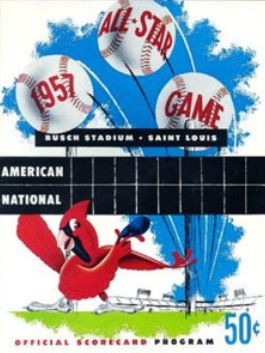
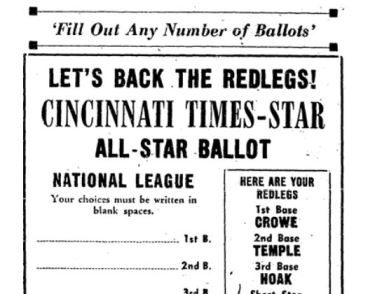
Fans began voting for the starting lineups of the All-Star game in 1947. It didn’t take long for energetic fans to get to stuffing. It came to a head in 1957 when Cincinnatians – with the help of their local newspapers, Kroger Grocery stores, and neighborhood taverns – accounted for half of all the votes cast that year.

The result – Reds won seven of the eight starting positions for the National League. Only the Cardinals’ Stan Musial squeaked through the “Red Curtain.” Commissioner Ford Frick ultimately pushed two Reds starters aside to make way for Willie Mays and Hank Aaron. (The American League won 6-5, despite a valiant 9th-inning rally that began with an RBI triple by Mays, who then scored on a wild pitch.)

57 all star program

And, Frick took away the fan vote.

Fans elbowed their way back into voting in 1970. And, back to stuffing.

** In 1975, the Milwaukee Brewers (owned at the time by current Baseball Commissioner Bud Selig) were said to have encouraged a single fan who was determined to vote Robin Yount and/or George Scott into the starting lineup. The fan was aided, he said, by the Brewers front office which provided him with some 30,000 paper ballots. The fan used a power drill to punch his ballots at a rate of 4,000 an hour. (All that drilling led to naught, although Scott went as a reserve and the American League won 6-3.)

** In 1999, in the early years of online voting, Boston Red Sox fan Chris Nandor cooked up a computer program that allowed him to vote nearly 40,000 times for his favorite Red Sox, including Shortstop Nomar Garciaparra. His stuffing worked and Garciaparra started. (Derek Jeter went as a Reserve, but probably hasn’t lost much sleep over it.)

** In 2012, the San Francisco Giants took heat for encouraging their fans to vote and vote and vote. Angry non-Giant fans suggested the computer geniuses of Silicon Valley were all Giants fans and were shamelessly hijacking the online voting system. Others pointed out that Giants’ AT&T Park offers free Wi-Fi, making online voting at the game way too easy.

And, who was the unfit All-Star starter in 2012? Giants Third Baseman Pablo “Panda Bear” Sandoval.  How’d it work out? Panda Bear was one of the stars of the game that night; his three-RBI triple helped lead the National League to an 8-0 victory.

No, I don’t like cheaters. But, I don’t see why teams shouldn’t encourage their fans to support their favorite players.

I’m confident that the All-Star game will include the best that baseball has to offer – based on statistical achievement, as well as intangible “nice guy” criteria that I think is the difference between a great player and an All-Star.

Because, really, I mean, what’s worse? Buster Posey starting at Catcher for the National League next month or the fact that only 57 percent of eligible voters voted in last year’s presidential election?

Can’t decide? Let me help you out. The presidential voting thing is worse.

But, the Cheesy Garlic Bread potato chip vote is pretty bad, too.

________________________________________________________

UPDATE!! The potato chip debate is not over. In August, I got the chips … and here’s my post on the taste test. Click here.

And, here’s more from me on All Star Game voting: From “Half Star to All Star”

Wondering what to do during your All-Star break? I’ve got you covered: Free Baseball: “I Hate The All Star Game” Edition

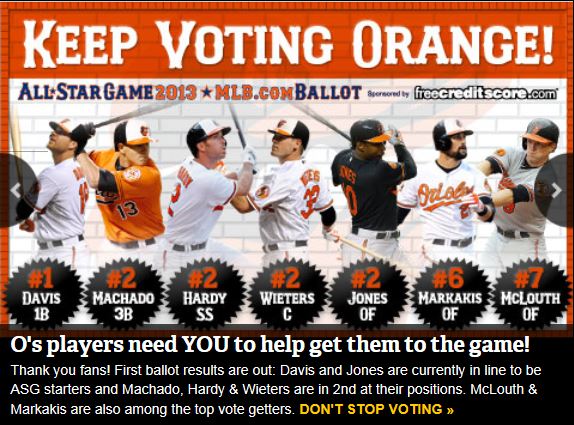
voteorange4

From “Half Star” To “All Star”

Good thing no baseball purists will ever see this. Their seamy-heads would get all steamy-headed.

Just us Cool Cats.

Voting for the Major League Baseball All-Star game is underway.

With just a few weeks to go, preliminary voting results for the American League and the National League have been released by Major League Baseball, leading to the annual hand-wringing of purists who bemoan that fans are – gasp! — voting for their favorite players, not necessarily the most statistically accomplished ones.

What was it that one blogger called All-Star voters? Oh, I remember! We are “Stupid.”

(Purists don’t vote, of course, but they delight in grumbling about the choices made by the “Stupids.”)

Go ahead, call me Stupid.

AllStarShoes

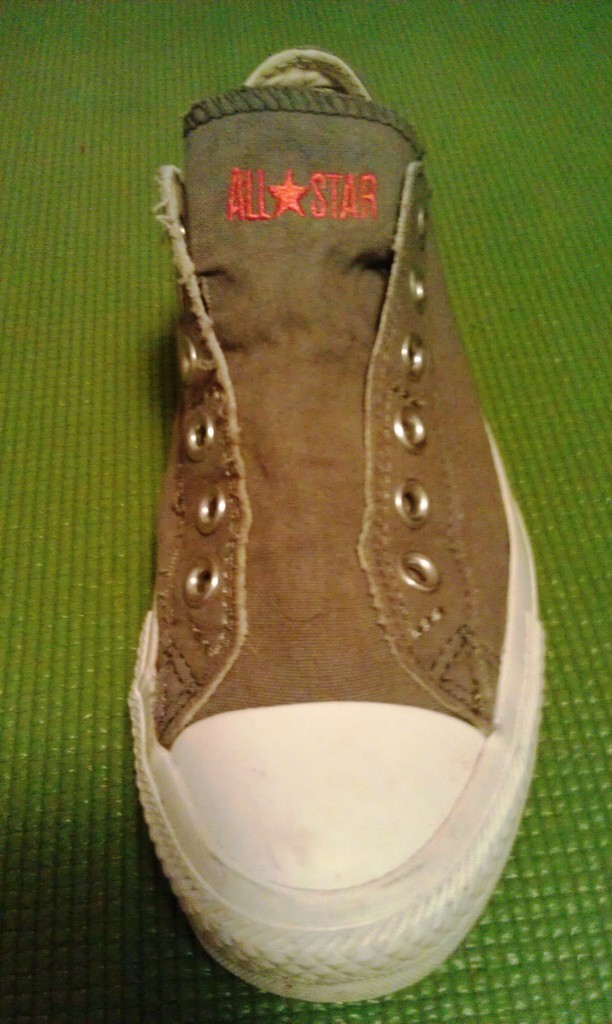
I may be Stupid, but my shoe thinks I am an “All Star,” too!

I vote. I vote online (35 times, which is what they allow). I scoop up a few extra ballots at the games, take them home, punch the chads, and send them in.

And, I admit it, I’m not voting for players based solely on statistics. There are plenty of awards given for accomplishment in baseball – MVP, Cy Young, Silver Slugger, Gold Gloves all recognize personal achievement. Trophies (and paychecks) galore!

Good numbers make you a “Half Star.”

But, for me, being a good sportsman, a good representative for your team, and other “nice guy” attributes elevate you to “All” Star.

The Baltimore Orioles, as always, are MY All-Star team.

And, this year, they are doing very well – from numbers to “nice guys.”

Orioles are League Leaders in many categories, including home runs (Chris Davis), doubles (Manny Machado), and team fielding. Yay!

I’m sure your favorite team has sweetened the voting pot. The Baltimore Orioles are offering discounts on tickets to online voters. They’ll even enter you into a contest to win an autographed Orioles All-Star jersey.

Here’s what you do: 1) go to orioles.com/voteorange. 2) Vote 35 times (for any players you like) 3) Win the autographed Orioles Jersey 4) Wrap it up neatly and give me the greatest birthday gift ever. (October 20, by the way.)

Baseball’s just a game afterall. And, it’s played for the fans. (That’s why they invented bleachers and Bobblehead Giveaway Nights.) You’re darn right, we deserve a vote.

But, don’t worry, Purists. We Stupids won’t ruin it for you. The All-Star game will be filled with worthy players, just as it’s been since 1933 when Babe Ruth homered in the very first one.

Every team will have at least one player there. Eight percent of baseball’s 750 players will wear an All-Star jersey this year.

We “Stupids” only vote in the starting lineup – a mere 26 percent of the 68 players who will make the trip. Players and managers will choose the vast majority of the roster, including all of the pitchers.

The deserving players will be there.

Fans have been voting for baseball’s All Stars since 1947, more or less. Baseball took away fan voting after Cincinnati Reds fans – in cahoots with their local newspaper, Kroger Grocery stores, and neighborhood taverns – brazenly stuffed the ballot box in 1957.

reds ballot 57 top

Fans got their right to vote restored in 1970.

If you want to vote for a player because he tossed a foul ball to you up in the stands, or signed your nephew’s cap, or takes part in community service programs in your city, do it.

I don’t think your vote is going to deprive the Tigers’ Miguel Cabrera or the Reds’ Joey Votto from going to the game.

An All-Star is much more than a line on a box score.

After all, nearly every single purist and odds-maker crunched the numbers last October and predicted with absolute certainty that the Detroit Tigers would win the World Series. The SF Giants swept ‘em, by the way. So, who’s Stupid now?

The All-Star game on July 16 also means something – since 2003 the winning league gets home-field advantage in the World Series.

Vote for YOUR All-Stars.

But, if you’d like to vote an All-Oriole ticket, and give Manny Machado and Chris Davis and the boys from Birdland some love, you have my blessing! www.orioles.com/voteorange

voteorange4

#1: Home Sweet Home ~ Spring Training in Charlottesville, VA

In baseball – as in life – the goal is to come home.

Spring Training ended Saturday.  Opening Day is (officially) Monday.

Hope Springs Eternal.

I have one spot left on my top five Spring Training series.

And, I come home to Charlottesville, Virginia.

It isn’t home. Not exactly. But, it’s just a few minutes up the road and that’s close enough.

Charlottesville isn’t the most amazing or the most interesting or the most historic Spring Training location.

No Babe Ruth. No Jackie Robinson. No island, no dance hall.

Charlottesville is my #1 Spring Training place, not because of what happened here, but because it’s home. And, every home should have somewhere to warm up your baseball bones.

Between 1890 and 1916, many teams spent Spring Training in Charlottesville.

The Boston Reds in the 1890s. The Boston Beaneaters (today, the Atlanta Braves). The young Boston Red Sox. The Washington Senators (who had officially changed their name to the Nationals in 1901, but who everyone still called the Senators, until the team just gave up and changed it back in the 1950s. So really, call them whatever you like here).

The Washington Post

The Washington Post

Teams unpacked at Wright’s Hotel near the train station (it was later the Clermont and is now the Starr Hill Building). Or, they rented local fraternity houses.

They trained on cold and snowy days – and there were plenty of them in March – indoors at Fayerweather Gymnasium (now home to the University of Virginia Department of Art). It was a state-of-the-art facility with one of the longest indoor tracks in the country.

They played at UVa’s Lambeth Field, which one reporter at the time called “the best college field.” (It’s still in use today for intramural sports).

Lambeth Field, Charlottesville. Early 20th-century. Photo Courtesy of UVa Small Special Collections Library

Lambeth Field, Charlottesville. Early 20th-century. Photo Courtesy of UVa Small Special Collections Library

Walter “Big Train” Johnson, one of the greatest pitchers to ever play the game, spent a couple Spring Trainings there as a National/Senator. (How good was he? He would win more than 30 games a season – twice – and consistently had an ERA around a sinful 1.50. Yeh, The Big Train was good.)

Teams jogged through Charlottesville as part of their training. They played games against UVa’s team. They took day trips to Thomas Jefferson’s home, Monticello, and rode the trolley to Fry’s Springs resort, known for its healing mineral baths and “Wonderland” amusement park.

Continue reading