
Come for the baseball, stay for the leprosy.
(Trust me, there will be leprosy.)

Arlie Pond, 19th-century pitcher, meets all of the unfussy criteria of my “12 Things” series – quirky name that doesn’t come around much anymore; a mess of time-worn obscurity; and a backstory that’s weird, but, and this is important, ultimately honorable.
Do my “12 Things” players come bearing a prom-date bouquet of interesting?
They never disappoint.
Sure, sometimes they give too much. What am I supposed to do with all this?
Today I’m going to squeeze into my skinny jeans of storytelling so I can get all things Arlie Pond into 12 tidy snack bites.
Let’s begin.
1. Easy Stuff First.
Erasmus Arlington Pond was born in 1873 in Saugus, Massachusetts, just north of Boston.

But his family moved to Rutland, Vermont early in his life and Vermont embraces him as their own (and so shall we). He was named for an uncle who was a doctor, and his father sold medical equipment. (Remember this. It will be on the test.)
2. Arlie Pond played college baseball, first at Norwich College, a military school, and then the University of Vermont.
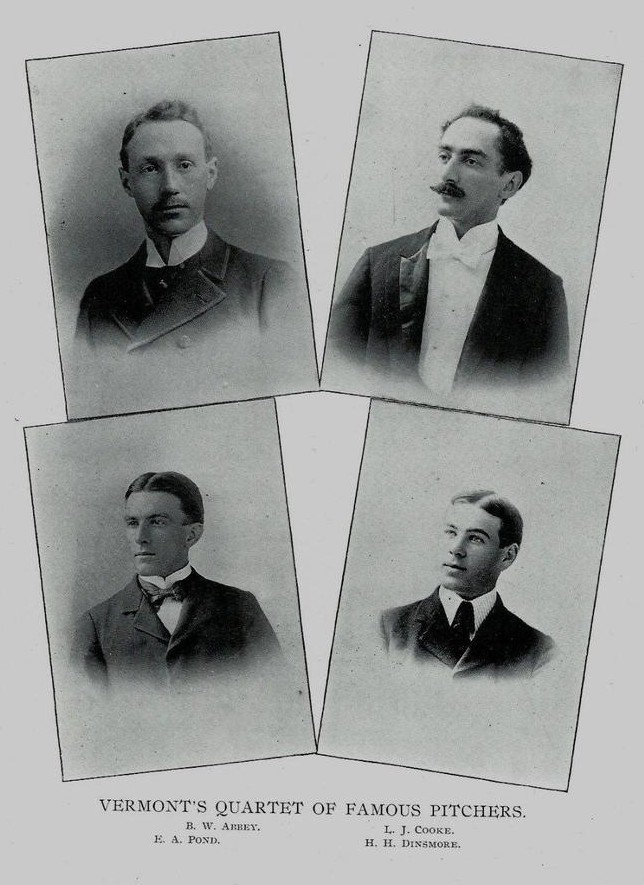
University of Vermont yearbook, 1890s. Arlie is bottom left.
When not playing baseball – first as an outfielder, then as a pitcher – he was getting an undergraduate degree and then a medical degree. (See? More medicine. And we’re not done yet.)
In 1892, at the University of Vermont, Pond pitched a no-hitter against Yale. (Think of Yale as the smug, powerhouse of 19th-century college baseball. You know, the LSU type.) That game earned Pond the nickname “the little wonder.” Although a closer read will tell you that Yale’s lineup was deep into its bench that day; several “regulars” had final exams and didn’t play. And, the game was called at seven innings, The Boston Globe reports, so Pond and his teammates could catch the last train home. Still, the box score reports a no hitter (and so shall we).
![Headline: "Vermont Fairly In It. [...] won the game by the remarkable score of 8 to 1, Yale not making a single hit. Phenomenal work of Pond and Hill"](https://thebaseballbloggess.com/wp-content/uploads/2025/08/the_burlington_free_press_fri__jun_17__1892_-no-hitter-vs-yale-front-page-news.jpg)
The Burlington Free Press, 6/17/1892
Baltimore, home to the smug, powerhouse 19th-century Orioles. Pond catches the eye of Orioles manager Ned Hanlon who, in June 1895, signs Pond to play that summer – med school’s “off season.”
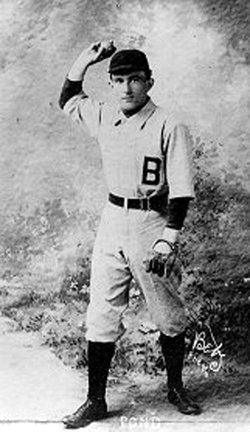
Pond’s pitching, The Baltimore Sun reports at the time, “is said to be quick and strong and to combine great speed with a slow drop that has never been gauged successfully. He is a hard hitter, a good outfielder, and an excellent third baseman, which position he fills when not pitching.”
But, The Sun continues, “it is doubtful whether Pond will prove as good a man in the League as in college circles, for many good college pitchers have been suddenly exploded when they strike fast company.”
(I’m pretty sure they don’t mean literally “exploded,” but if they did that would certainly be worth mentioning.)
Pond makes his Orioles debut as a reliever in Game 1 of a doubleheader in Cleveland on July 16, 1895. He pitches the game’s final two innings and gives up no runs in the Orioles 6-3 loss.
The next day, July 17, he makes his first professional start in Game 2 of yet another doubleheader in Cleveland. He gives up six runs in the 6-3 loss; the game is called after seven innings on account of darkness.
(Yes, you counted correctly. it was a “Double-Double” Header. The Orioles will drop all four games, which, by 2025 standards, feels about right.)
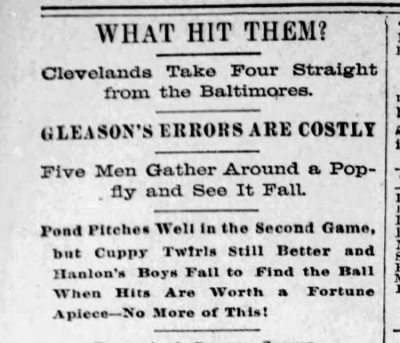
The Baltimore Sun, 7/18/1895
“No More of This!”
Manager Hanlon was impressed with Pond’s outings, telling The Baltimore Sun: “This lad is destined to be a great pitcher. He went in yesterday under the most unfavorable conditions and in spite of the efforts of the Cleveland players and the crowd to rattle him, he kept his nerve well. He has speed, control, and good command, and I consider him a very lucky find.”
So, what was all of this “rattling” about? Pond was playing without a cap.
Seriously.
Let’s let the next day’s Sun explain:
“Like most college players he works without wearing a cap. On this account he was unmercifully guyed by the bleachers, but he did not once loose his nerve.”
Hat heckling? You mean like this?
“Where’s your hat, Smart Boy?”
Insert Your Hat Heckle Here: [ ]

And he had so many to choose from.
4. The place where I mention a bunch of numbers. Pond played in four big league seasons – 1895-1898 – all with the Orioles. He appeared in 71 games – 69 as a pitcher, two as an outfielder.
A righty, he won 39 games, lost 19, and had a career 3.45 ERA.
“He was a little fellow, short and chunky,” his Orioles teammate Joe Kelley later remembered.
Because, honestly, who doesn’t want to be called “short and chunky” by a teammate?
The Baltimore Sun noted at the time that Pond “looks something like an enlarged edition of [Wee Willie] Keeler.” A later Sun report describes Pond as “young, industrious, [with] no bad habits.”
No bad habits. Not one. None. Nada. I bet The Baltimore Sun never said that about you.
5. Pond was the Orioles team doctor. Come on, if your team has a pitcher who moonlights as a medical doctor, you know he’s going to be your team doctor.

The Baltimore Sun, 4/2/1896
Shades of 2025 …
While there isn’t a lot of info on exactly what doctoring Pond did for the Orioles, we do know from reports that he bandaged at least one teammate’s sprained ankle. And, he once lanced an abscess on his own hand. Eww. On another occasion, Pond gamely tended to the sprained ankle of an opposing player.
(As of August 30, 2025, 30 different players have been placed on the injured list by the Orioles this season. Stay tuned, it may be more by the time you read this.)
6. Medical Twirlers! So Many Doctor-Pitchers!
Doc Gooden wasn’t a Doctor. But, Arlie Pond was. And, he wasn’t alone.
On May 14, 1896, Dr. Pond faced off against Dr. Harley Park Parker, the Chicago Colts pitcher.
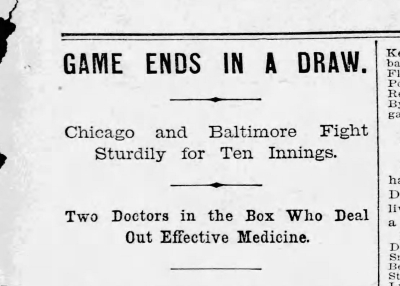
The Chicago Chronicle, 5/15/1896
It was a 10-inning 5-5 draw.
And, then on July 1, 1897, Dr. Pond faced off against Washington pitcher Dr. James “Doc” McJames.

The (Washington, DC) Morning Times, 7/2/1897
Pond’s Orioles win 6-3.
(Harley Park Parker. James McJames – this post really does have everything.)
7. From Dr. Pond to Lt. Pond.
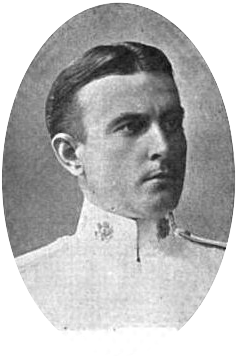
In May 1898, in the midst of a mediocre season, rumors swirl that the Orioles plan to trade Pond. Soon after, on May 23, it’s reported that Pond has contacted the Army for information on enlisting as a surgeon.
There are reports that he is joining the military to avoid being traded which, if you think about it, is probably the only time a ballplayer used the military as an “out” from baseball.

The Baltimore Sun, 5/24/1898
He enlists in the Army’s hospital corps and is ordered to report to Ft. Myer, Virginia, on July 7, 1898.
The night before, July 6, he pitches his last professional ballgame – the Orioles shut out Philadelphia 15-0.
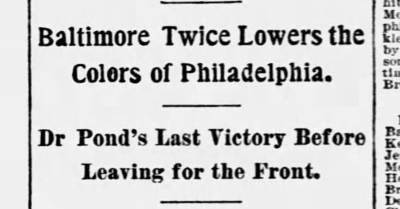
The Boston Globe, 7/7/1898

7/6/1898
“The Doctor’s work was masterly,” The Baltimore Sun reports. “Pond did not let himself get careless, like some of the pitchers, but he kept right on mowing the batsmen down until nine goose eggs had been chalked up.”
He promptly leaves for the Army.
In his military uniform, Chicago’s Inter-Ocean reports, Pond is “picturesque and romantic to look upon.” (Take that Joe Kelly, with your “short and chunky” memories.)
Pond goes on to serve in the Spanish-American War, first in Cuba and then in the Philippines, and during World War I. In 1899, he’s awarded a “gallantry in action” citation for treating wounded soldiers while under fire in the Philippines.
Time for your 7th Inning Stretch …
Now back to our post …
8. Oh, almost forgot – Arlie Pond helps eradicate leprosy from the Philippines.
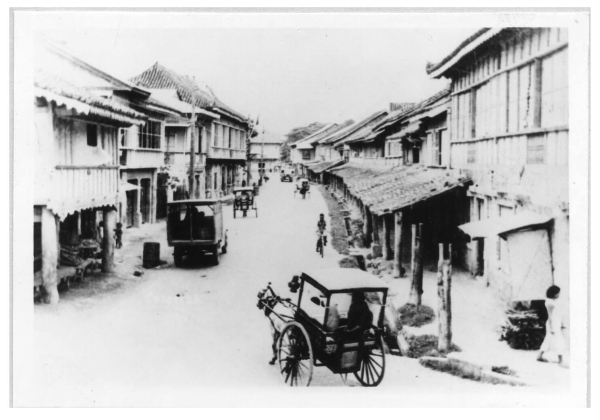
Cebu City, Philippines, Calle Colon, circa 1910
After the Spanish-American War, Pond remained in the Philippines becoming President of the Board of Health of the Cebu region to focus on the nation’s public health and sanitation.
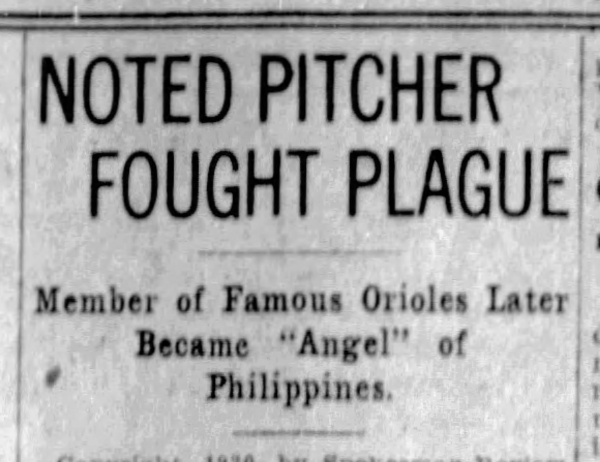
The Spokesman-Review, 9/23/1930
As the Burlington Free Press wrote in Pond’s obituary in 1930: “He helped to rid the islands of the scourge of leprosy.”
But, because eradicating leprosy wasn’t enough, reports also credit Pond with helping curb the spread of yellow fever, malaria, cholera, the bubonic plague, dysentery, and smallpox across the Philippines.
One account notes that he was responsible for small-pox vaccines reaching more than a million citizens on Cebu Island.
(What have you eradicated lately?)
9. Plot twist! – Arlie Pond becomes a coconut baron and a millionaire.

The Baltimore Sun, 1/24/1924
And, because he couldn’t just be any rando coconut growing hobbyist (please …), Pond’s innovative coconut growing methods became a model for other “coconuteers.” (Coconuteers. Not a word. Should be a word.)
I believe this is the appropriate opportunity to remind you that the U.S. Postal Service does allow you to ship a coconut without a box. As USPS states: “Simply address the coconut and add your return address on the husk, have it weighed for appropriate postage, and it is shipped as-is.”
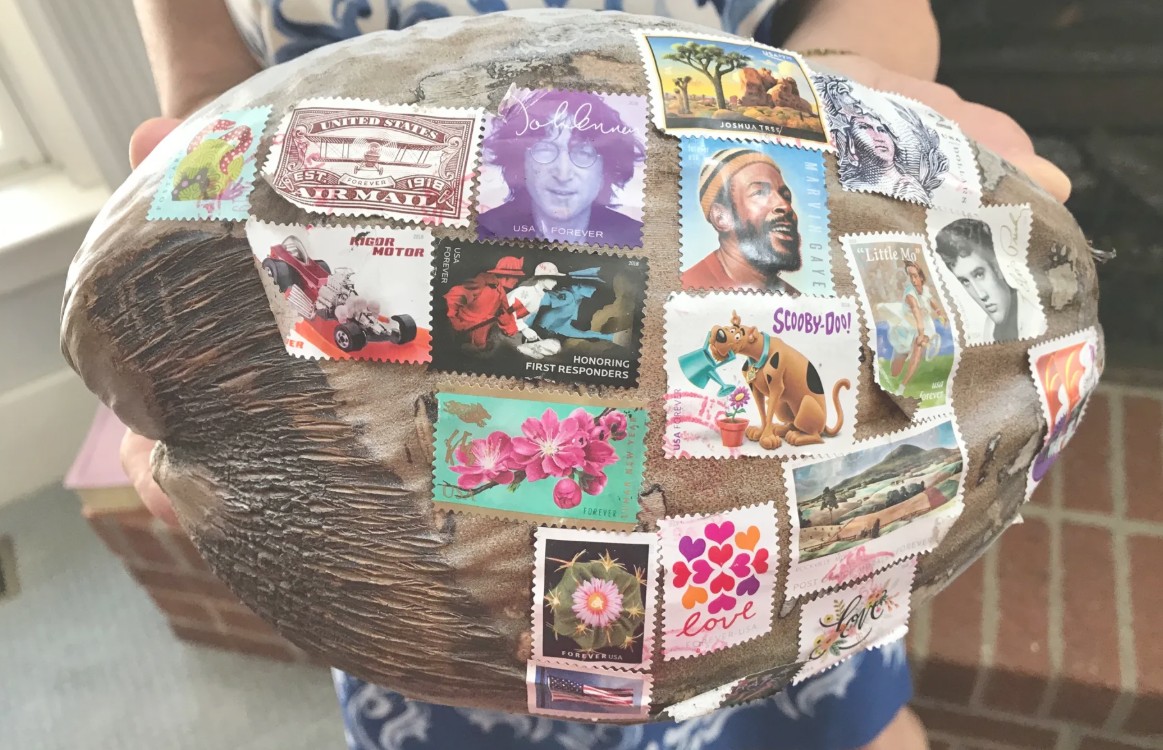
You’re welcome.
10. He was a bon vivant, a Renaissance man. Sorta. (I just wanted to use “bon vivant” in a sentence.)
More than a pitcher … more than a surgeon … more than a millionaire coconuteer.
He was a champion at billiards, lawn tennis, “cocked hat” – a bowling spinoff – and golf. He introduced baseball to Cebu Island.
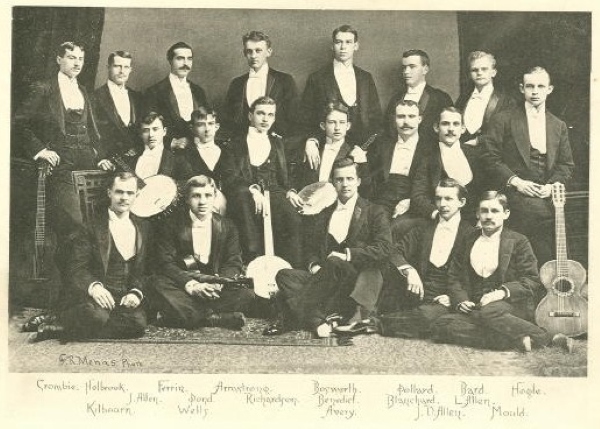
University of Vermont yearbook, 1890s. Banjo Club. Arlie is middle row, second from the left.
And he played the banjo!
11. Arlie Pond died on September 19, 1930 on Cebu Island following surgery for a bout of appendicitis.
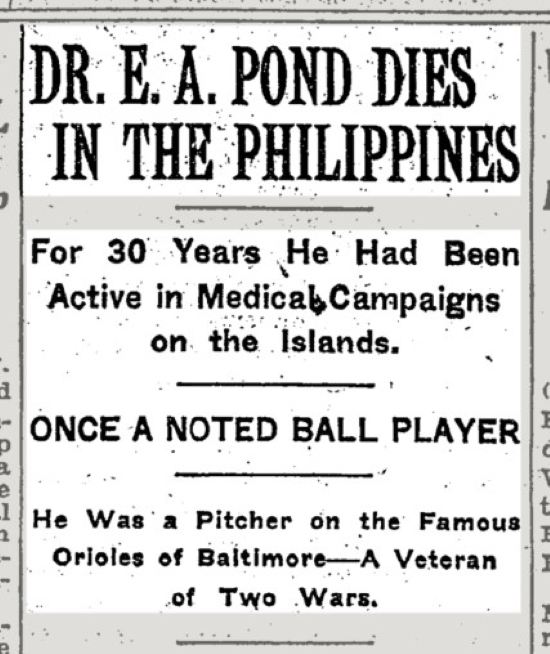
The New York Times, 9/20/1930

The Baltimore Evening Sun, 9/20/1930
It’s said the community reached out to the U.S. Army to send a surgeon to help save Pond’s life, but the Army reported that it lacked a vehicle to make the journey.
He was 58.
Pond’s impact in Cebu was so profound that flags flew at half-staff and businesses closed on the day of his funeral.
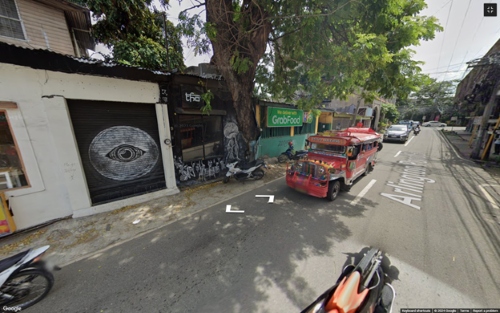
Arlington Pond Street via Google Maps
A street was later named in his honor.
12. Meet Mrs. Pond.
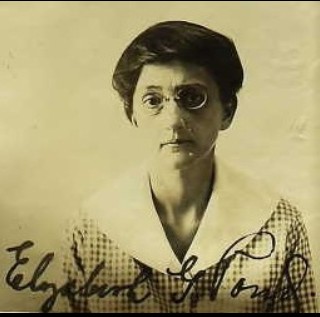
Elizabeth “Bessie” Gambrill Pond met and married Arlie during his Baltimore baseball days. She settled with him in the Philippines and supported his work by volunteering on public health initiatives, including becoming a patron of San Lazaro, one of the country’s largest leper hospitals.
After Arlie’s death in 1930, Bessie stayed in Cebu, continuing her public health work. During World War II, she was imprisoned at a Japanese internment camp in Manila, where she died of malnutrition in the spring of 1943. She was 62.
Bessie, too, has a street named in her honor in Cebu. Elizabeth Pond Street is about 8/10 of a mile away from Arlington Pond Street. I’m told there’s a lovely coffee shop on her street along with other businesses.

2023
Bintana Coffee House, 181K Elizabeth Pond Street, Cebu City

 The Baseball Bloggess
As usual, an interesting story. A true Renaissance man. Can’t help but feel for Mrs. Pond and the hardships of a Japanese internment camp
I know. I was so heartbroken to learn of this and that’s why I decided she more than earned a spot in Arlie’s story.
Jackie,
Thank you so much for the interesting story about the historic life of Arlie Pond and his wife.
I will send it on to a family member who is from the Philippines.
Sincerely,
Taylor
J. Taylor Beard, PhD
Associate Professor Emeritus, UVa
Thank you so much for reading, Taylor. I hope you are able to make it to some Fall Ball games this fall!
Where to begin? Splendid story about an unknown, bringing baseball to the Philippines and growing coconuts Thanks so much for sharing his story. I almost broke a rib laughing about mailing a coconut. Your writing and sense of humor – a welcomed treat today Jackie. You’re missed.
Steve, your blog and words are always, always, always top-notch wonderful. I’ve made some changes in my work life recently that I hope will lead to more time at my keyboard … more time for words, music, baseball … you know, all the good stuff. You’re one of the best and that you actually read the stuff that comes out of my keyboard makes my heart happy.
I hope the work life change gives you more time to write and create. What you put together for your posts is truly authentic and original and man I learn about nuggets outside the highway lines. Thanks Jackie.
What a great story! There should be a movie… but in the meantime I can’t wait to mail some coconuts.
Thanks Andy! Yeh, coconuts in the mail … better than Christmas cards! Let us know when you swing around this way next and we’ll get together and talk coconuts, banjos, whatever.
Welcome back, Writer, Researcher, Blogger
Thank you! Both the Orioles and I need to get our mojo back. Well, I’m working on it anyway.
Agreed with what others have commented thus far — what an interesting man! He certainly had a fascinating life full of variety. It’s so weird to think of Yale (or any other Ivy League school) being a powerhouse in any athletic endeavor in today’s world. My, how things change.
I know, Yale! And weirdness abounds, because back in the 1890s the Orioles were also considered a sports powerhouse and that seems just as hard to wrap my head around these days.
Great writing Jackie! Interesting couple and so accomplished! I have one thing in common with Arlie, no bad habits! 😅