Sitting Here Thinking About Willie Mays

Warning: Editor/Husband has been sick and in bed since Christmas Eve. This means that I am a) most likely highly contagious, and b) posting without an editor. If you cut out now, I’ll understand. (I’ll be deeply hurt, but I’ll understand.) (Sort of. I’ll sort of understand.)

Someone found this blog by searching for this:
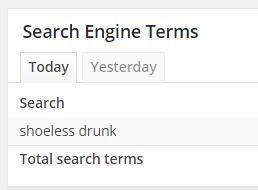
shoeless drunk

Shoeless drunk?

First of all, I’m very disappointed in you, Internet. Second of all, I wonder what that person was looking for?

I searched for “shoeless drunk” on the Googler and I didn’t find me. (What I did find was disgusting, with the exception of a few movie stills from 1967’s “Barefoot in the Park,” starring Robert Redford and Jane Fonda.)

barefoot in the park

In writing about baseball, there is always Shoeless Joe Jackson and quite a number of drunks, so maybe it wasn’t such a stretch after all that someone landed here.

Embed from Getty Images

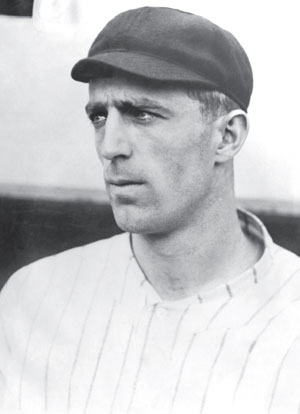
Shoeless Joe Jackson, 1919.

Shoeless Joe may have never really been shoeless, as he occasionally denied the story of ever playing in his stocking feet in the minor leagues.  But, he also occasionally said the story was true, so who’s to know?

Also, no distraught kid ever tugged his sleeve outside a Chicago courthouse and said, “Say it ain’t so,” when the White Sox were found to have tossed the 1919 World Series.

But, Damon Runyon did say this: “Even when he’s trying to throw a Series, Shoeless Joe Jackson can still hit .375.”

This led me to wonder when Joe Jackson died.

December 5, 1951. He was 64 and several hundred people attended his funeral in Greenville, South Carolina.

This led me to wonder, in a tangent I can’t explain, when Willie Mays hit his first home run.

And, it was 1951, too. May 28.

As most baseball fans know, Mays’ first home run was also his first hit as a big leaguer. He had gone 0-for-12 in his first three games. This was his first home at-bat at the New York Giant’s Polo Grounds.

The home run was, The New York Times said, “a towering poke that landed atop the left-field roof.”

The homer, off the Boston Braves’ Warren Spahn, wasn’t enough. The Braves defeated the Giants that night, 4-1.

Embed from Getty Images

Willie Mays.

Historian Charles Einstein shared these quotes from that game:

“You know, if that’s the only home run he ever hits, they’ll still talk about it.” ~ Russ Hodges, who called the game on radio that night. (And, look … he’s right!)

“For the first 60 feet it was a hell of a pitch.” ~ Spahn, who said he threw a fastball as his first pitch to Mays because he was sure Giants’ manager Leo Durocher had told Mays to lay off the first pitch. (Durocher hadn’t.) Or, maybe it was a curve ball, which scouts said Mays couldn’t hit, as Spahn remembered it in 1973.

“The ball came down in Utica. I know. I was managing there at the time.” ~ Lefty Gomez (This would be an even better quote if Gomez actually had been managing in Utica at the time. He hadn’t. But, it’s still pretty good.)

“I never saw a f*ing ball get out of a f*ing ball park so f*ing fast in my f*ing life.” ~ Leo Durocher

I can’t show you that home run, of course, because the Internet and MLB.TV hadn’t been invented yet.

Embed from Getty Images

Warren Spahn.

Mays would hit 17 more home runs off of Spahn including one in the 16th inning of a game on July 2, 1963.

By 1963, the Giants were in San Francisco and the Braves were in Milwaukee.

Mays’ walk-off home run off Spahn in the 16th ended one of baseball’s most awesome pitching performances: 42-year-old Spahn, for the Braves, and 25-year-old Juan Marichal, for the Giants, threw a combined 428 pitches through those 16 innings.

The Giants won 1-0. 

“It was a screwball,” Mays said following the game, “But I guess Warren was getting kind of tired.”

“Yes, I was tired,” Spahn said, “But, I wish Willie had been tired, too.”

I can’t show you that home run either. But, here’s Mays and Marichal talking about it:

“Ok, let me see what I can do about it.”

(Giants fans of a certain age will insist that Willie McCovey’s foul ball in the bottom of the 9th was actually inside the foul pole and should have been the home run that ended the game. McCovey will tell you that, too. But, like the Internet, batting helmets, and wild card teams, instant replay hadn’t been invented yet.)

And, so here it is Boxing Day and Editor/Husband is still feeling crummy and is fast asleep in the room next door. He will dislike this post when he sees it, because it just wanders around pointless.

Just sitting here thinking about Willie Mays.

Becomingly Thankful

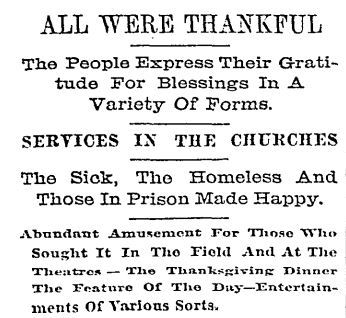
“Everybody was becomingly thankful.” ~ The Baltimore Sun, November 26, 1897

There’s not a lot of baseball on Thanksgiving.

It’s just turkey and football, isn’t it?

Sure, maybe there’s someone, somewhere having a catch before dinner. But, finding a game – a real game – is hard to do on Thanksgiving.

It was pretty much just turkey and football back in 1897, too. And, it’s been that way every Thanksgiving since.

But, I did find two bits of Thanksgiving baseball in 1897 …

On Thanksgiving Day, the boys of St. Mary’s Industrial School – the school for truants, miscreants, and wayward boys located on the outskirts of Baltimore – mostly played football. But, a few of them played baseball that day. It was a dull and cloudy day, but the rain held off until after dark, so the day was fine enough for outdoor games.

Thanksgiving 1897 was, for the 535 boys of St. Mary’s, “a delightful day,” The Baltimore Sun reported.

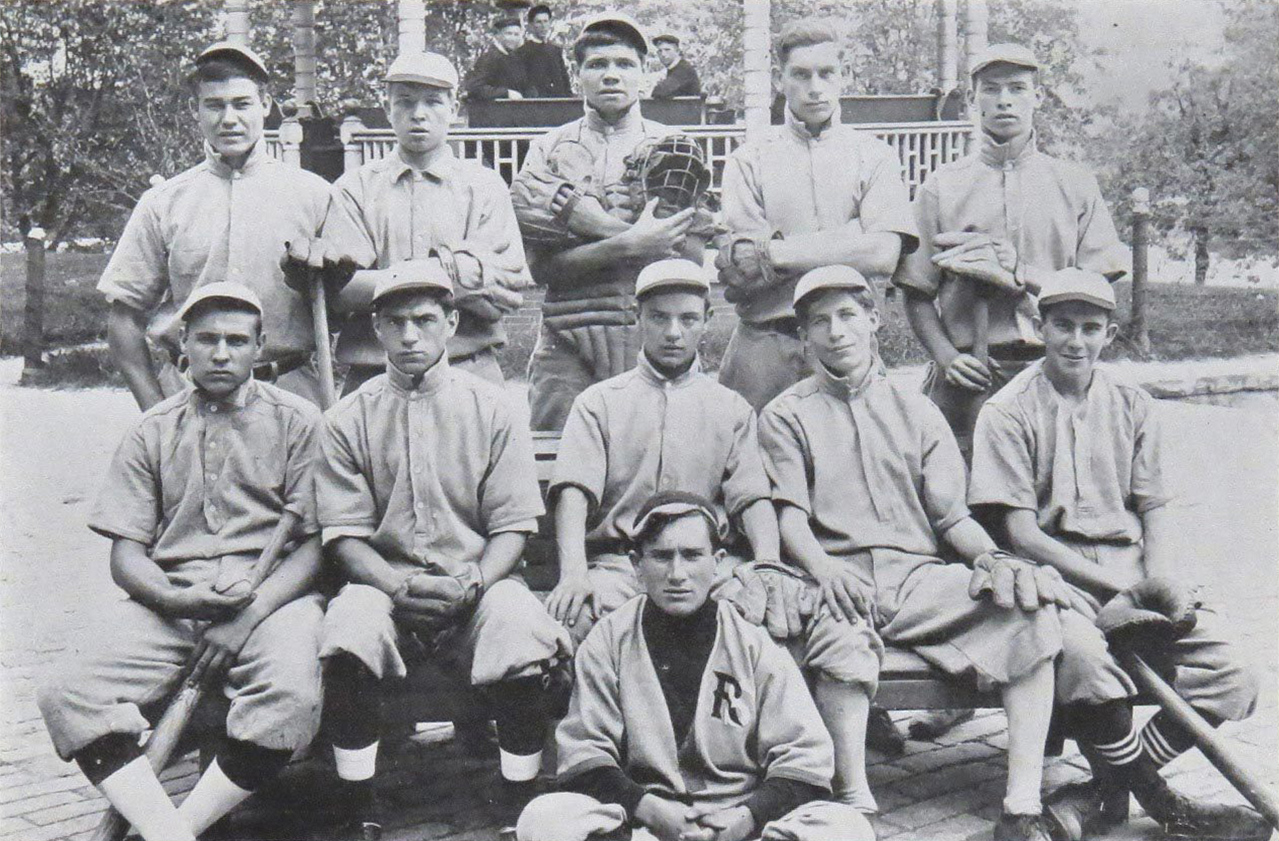
The school was still five years away from enrolling its most famous student – George (not-yet-Babe) Ruth who was committed to St. Mary’s by his parents for being incorrigible in 1902.

Babe_Ruth_-_St._Mary's_Industrial_School

Public Domain image (1913)

In 1897, George “Baby” Ruth was just 2 years old and several years away from becoming a star player for St. Mary’s Industrial School. (Here he is in 1913 — back row, center, with his catcher’s gear.)

The Baltimore Orioles also played on Thanksgiving Day 1897.

They had just finished their season in second place and were out on the West Coast on one of those barn-storming “all-star” tours that travelled through warm-weather states in the off-season as a way to make the owners some dough and help players make ends meet.

orioles california tour 1897

Public Domain (1897)

Baltimore Orioles “California Tour” Promotional Photograph. 1897

The Orioles spent their Thanksgiving being beaten 4-3 by the Sacramento Gilt Edges, a California League team.

(The Gilt Edges, by the way, got their name from Sacramento’s Ruhstaller’s Brewery, maker of Gilt Edge beer. The brewery still exists and they still make Gilt Edge.)

gilt edge beer

But for most Americans, Thanksgiving Day 1897 was a day for church-going (“services were most elaborate affairs, and in their magnitude and importance, were only surpassed by the Easter Festivals,” The Washington Post explained) … college football (the University of Virginia beat Carolina in the “South’s Oldest Rivalry” game, 12-0, wahoowa!) … and serving roast turkey dinners with all the usual trimmings to the poor, the infirm, the elderly, and the imprisoned.

Thanksgiving Day back then, it seems, was less a day to count one’s own blessings, but instead was a day to help provide the less fortunate with a belly-filling meal for which they could be thankful.

The Humphrey House, a Jamestown, New York hotel and restaurant, reminded its diners of the blessings of sharing a meal with the poor on their Thanksgiving Day menu.

humphrey house thanksgiving menu 1897

Public Domain, via University of Nevada, Las Vegas, University Libraries. (1897)

“They who divide the plenty, By a bounteous Father given, Shall multiply this day the thanks, That sweetly rise to Heaven.” 

(You can see the Humphrey House’s full Thanksgiving menu here.)

As The Baltimore Sun explained, “Many generous-hearted people were anxious that others should find some rays of sunshine in their lives to be grateful for and devoted part of the remaining hours to aiding the poor, sick, or those confined in institutions.”

Baltimore Sun November 26 1897

The Baltimore Sun, November 26, 1897

“Everybody was becomingly thankful.”

That’s how The Baltimore Sun described Thanksgiving Day 1897.

Becomingly thankful.

May we all be becomingly thankful today, too.


I Wonder What Mike Trout Is Doing Right Now?

“The world’s series turned over and gave its last gasp yesterday. …This morning will see all the players except home-breds on their way back home or headed for the great open spaces where the streams abound with fish and woods are full of game.” The New York Times, October 18, 1923

I wonder what Mike Trout is doing right now?

How strange to have your free days all bundled together into a handful of weeks in the chill of fall and winter. I spend my free time following baseball. Mike Trout doesn’t.

It’s been one week without baseball.

It’s estimated that 800,000 people turned out in Kansas City on Tuesday to greet the World Series champion Royals along the parade route – that’s nearly half the city’s population. Businesses and schools closed, while bars along the parade route opened at 8:30 a.m.

That’s righteous support, Royals fans! You have made baseball feel magical and important again. Take that, Super Bowl.

Embed from Getty Images

That’s one mess of blue.

So, how to spend these winter-ish days? They are, to the casual observer, baseball-less, but, to those who know better, they are filled with games in Arizona and the Caribbean and Australia.

There’s the intrigue of the “hot stove” where owners toss money and players around like Secret Santa gifts, and where I, as is tradition, wonder how I ended up loving cheapskates like the Orioles. There’s a candy cane stuck in my stocking, while everyone else gets coffee gift cards, imported chocolates, and Zack Greinke.

For most players the off-season is already a month old, and these first weeks are spent hunting and fishing, getting married, and having surgeries to knit up season-old injuries.

Cy Young 1908 public domain

Public Domain via Library of Congress

Cy Young

In 1904, Cy Young advised: “Take things comparatively easy during the off season. … Light farm work in the off season has helped me. It is healthier than life in the big city.”

I’m all for taking things comparatively easy, but, any farmer will tell you, “light” farm work is always more strenuous, complicated, and exhausting than you planned on. And, I’m pretty sure that “light farm work” in 1904 meant 14 hours of labor, a hunk of bread for lunch, and trying not to lose your hand in the thresher.

In 1909, the “Old Fox” Clark Griffith, managing the Cincinnati Reds at the time, stopped his players from playing baseball in the off-season. “Playing ball in the winter ruins a man for his best work in the good old summer time,” he told The Washington Post. “Baseball is a sport which taxes the nerves as well as the muscles, and a man is sure to go stale unless he has plenty of time to recuperate.”

clark griffith 1920 public domain

Public Domain via Library of Congress

Clark Griffith Reminds You To Take It Easy … Get Some Rest.

This didn’t stop other players from making a buck by joining barnstorming teams that traveled the country or headed to Cuba or played in indoor leagues.

During the 1980s, the Royals’ wall-climbing outfielder Bo Jackson would spend his off-season as a running-back with the LA Raiders. He called football his “hobby.”

Bo Knows … 

Cy Young pitched for 21 seasons; won 511 games, the most in baseball history; and threw three no-hitters, including one perfect game.

So, maybe he’s right. About the taking it easy part, not the light farm work.

Maybe fans need time to recuperate, too.

The only light farm work I will be doing is taking the garden gnomes in for the winter.

gnome

But, there are books to read, cats that need feeding, and rooms that need dusting. I’m sure there is other stuff as well. And, if you give me a couple days, I will surely come up with something.

mookie the unroller

To Do: Hang The Toilet Paper Back On The Roller.

And, I saved a couple games on the DVR, too … … … because I lied about dusting.

Oh … and what about Mike Trout? Come to find out, he wants to be a weatherman and he’s angling to join The Weather Channel this off-season. “We’re planning on me doing a story when there’s a big storm in Jersey,” he said. “Hopefully, we get a big snowstorm.”

Angels at Orioles June 27, 2012

Angels at Orioles June 27, 2012. Photo by Keith Allison from Owings Mills, MD [CC BY-SA 2.0], via Wikimedia Commons

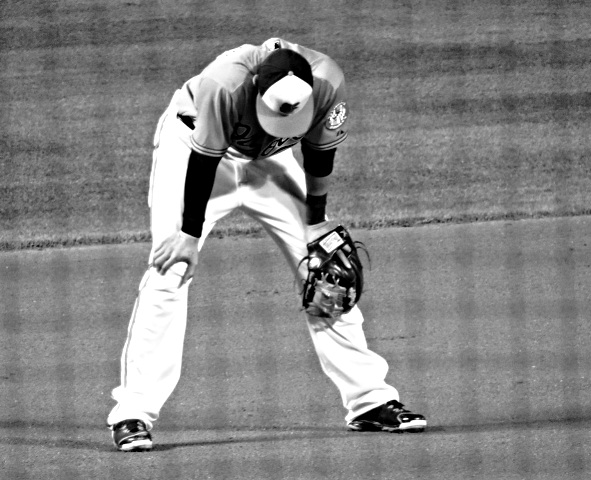
Mike Trout is a) robbing a “sure” home run from Orioles shortstop J.J. Hardy, or b) checking to see which way the wind blows.

The all-knowing Twitter was able to tell me exactly what Mike Trout was doing “right now” as I wrote this post:

Huntin’ and fishin’. That’s all they do isn’t it?

Happy Place: There’s No Place Like It

When The Daily Post asked bloggers to show their “Happy Place” on their blogs this week I wasn’t going to play along. After all, what do you expect me to say?

Mid pleasures and palaces though we may roam,

Be it ever so humble, there’s no place like home;

A charm from the skies seems to hallow us there,

Which seek thro’ the world, is ne’er met elsewhere.

Home! Home! Sweet, sweet home!

There’s no place like home! There’s no place like home!

~ From the 1823 opera “Clari, or the Maid of Milan.”

happy place

© The Baseball Bloggess

Funny thing. 1823 is also the year that we can find the first known references to the game of “base ball”:

“I was last Saturday much pleased in witnessing a company of active young men playing the manly and athletic game of ‘base ball’ at the Retreat in Broadway.” ~ The National Advocate, April 23, 1823.

Coincidence? Of course not.

There’s no place like home.

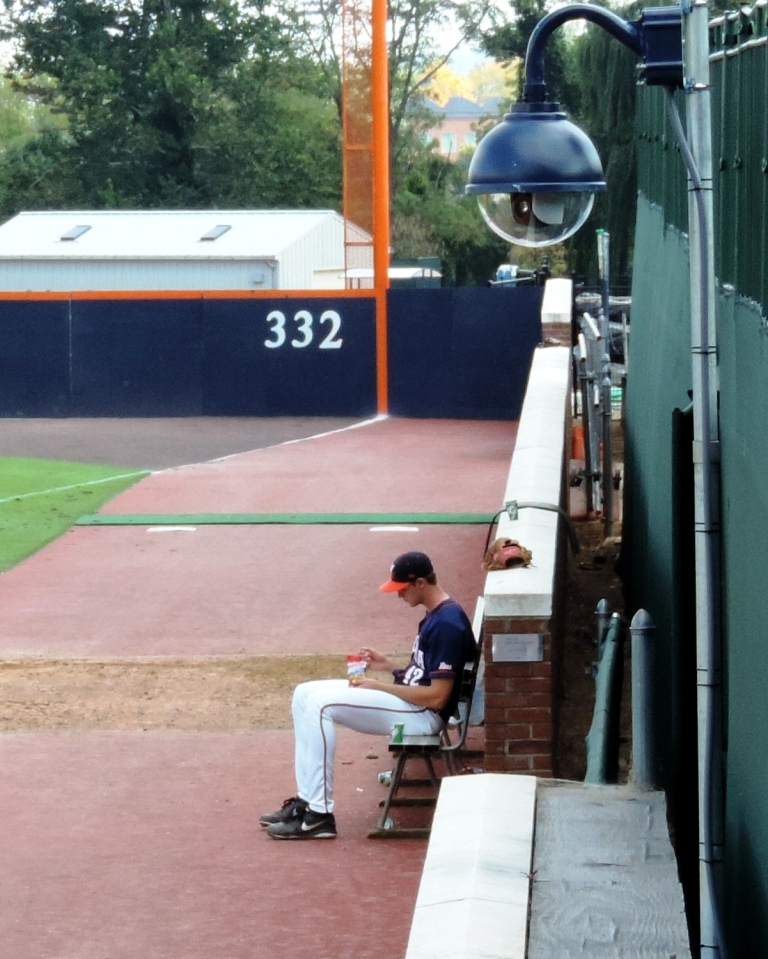
Photo: The University of Virginia vs. the Ontario Blue Jays. Davenport Field, Charlottesville, Virginia. October 13, 2015. (Taken behind the netting. Sorry about that.) © The Baseball Bloggess

UVa defeated the Canadian squad (an 18-and-under team featuring some of the best young players in the country) 12-5 last night in a strange 14-inning “exhibition” game that was a more a showcase for scouts, I think, than an actual game. Players batting out of order. Pinch runners pinch running and then disappearing. Really odd.

But, still … even really odd baseball is Happy Place worthy.

In response to The Daily Post’s weekly photo challenge: “Happy Place.”

Coulda Been Worse

sad kid

© The Baseball Bloggess

Hey, kid! Don’t freak out! The Baltimore Orioles have had plenty of seasons worse than this one. 

Sure, the Orioles will finish a crummy third in the American League East this season. They’ve hovering a game under .500 with just one left to play.

But, it coulda been worse.

In 1899, the Baltimore Orioles finished 4th in the 12-team National League with a 86-62 record.

Balt Sun 9 9 1899

The Baltimore Sun, September 9, 1899

“The Poor Orioles”

Their .581 win percentage, good enough for 4th place in 1899, would have won them this year’s AL East pennant. So, there. Take that, Blue Jays.

Those Orioles weren’t that bad, especially when you realize that 1899 was also the season that the Cleveland Spiders went 20-134, the worst team in baseball history.

(The Spiders were so bad – and attracted so few fans – that most teams refused to travel to Cleveland for games, forcing the Spiders to play most of their games on the road. Teams don’t get to do that anymore. It doesn’t matter if raw sewage is seeping into the dugouts, you still have to play in Oakland.)

But, finishing 4th wasn’t good enough. At the end of the season, the League decided to cut its “deadwood” and the Orioles were tossed in the chipper along with those lousy Spiders, the Washington Senators, and the Louisville Colonels.
In 1902, a patched-together Baltimore Orioles, now in the American League, finished 8th – 34 games out of first – with a 50-88 record.
Balt Sun 9 30 1902

The Baltimore Sun, September 30, 1902

“Almost Like a Funeral”

At the end of the season, that team was packed up and moved to New York.

Damn Yankees.

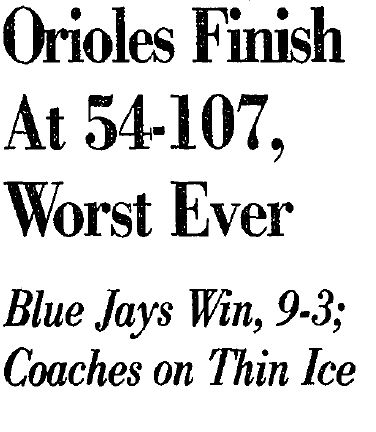
In 1988, the Baltimore Orioles started their season 0-21, the worst start by any major league team ever. They finished the season 54-107.

Washington Post 10 3 1988

The Washington Post, October 3, 1988

Worst O’s Team. Ever.

But, they got to stay in Baltimore.

So, hey. There is that.

And, this season?

Adam Jones 2015

© The Baseball Bloggess

Even All-Star Center Fielder Adam Jones couldn’t figure out how to fix this team.

One game left. And, one win away from finishing at .500.

manny machado 2015

© The Baseball Bloggess

All-Star Third Baseman Manny Machado. A lot of this season was kinda stinky. (But, not Manny.)

Ending the season with a win today over the Yankees sure would be nice.

But, either way … it coulda been worse.

kids

© The Baseball Bloggess

Photos: Oriole Park at Camden Yards, Baltimore. 2015. © The Baseball Bloggess

“The Official Table of the Slaughter”

Oh, for crap’s sake. Can nothing go right for the Orioles?

Yesterday, I shared one of those “On This Day In Baseball” stories. It’s here.

How, on September 3, 1897, two Baltimore Orioles – outfielder “Wee” Willie Keeler and first baseman “Dirty” Jack Doyle – both went 6-for-6 in a single game.

This, historians agree, would be the only time in baseball history that two teammates went 6-for-6 in the same game.

I checked the story out. I checked the box score. I knew that there was a very brief time that walks counted as hits in baseball. But, that was 1887. And this was 1897.

box score 9 3 1897 keeler 6 for 6

Keeler — 6 At Bats, 5 Runs, 6 Hits

I should have left it at that. I should have said, “Wow. Cool.” I should have walked away.

But, no.

Because, come to find out, box scores don’t always agree.

Especially box scores that are nearly 120 years old.

So, out of curiosity, I checked the Baltimore Sun’s report from the game.

And, wouldn’t you know …

Baltimore Sun Box Score 9 3 1897 Keeler 4 for 6

Keeler — 6 at bats, 5 runs, 4 hits

“The official table of the slaughter” that day shows Keeler with just four hits.

Not that this stopped the Baltimore Sun from also accepting the legend of 6-for-6.

In a 1997 story on Keeler, the Sun’s Mike Klingaman wrote:

“Seven times [in 1897], he got four hits in one game. Four times, he got five hits. Once, Keeler went 6-for-6.”

But, the Internet can be a wild and wonderful place, and I found this buried deep in its archives:

Joe Kelley Letter jan 3 1940

Robert Edwards Auctions, 2008

A letter from Orioles outfielder Joe Kelley about the 1897 game

(Kelley, you may remember, went 5-for-6 in that game. He was also known as a something of a cutie pie ladies man who would slip a comb under his cap, so he could tidy up in the outfield before flirting with the gals during games.)

In 1940, Kelley, then 68, responded to historian Albert Kermisch’s inquiry about the game:

“Your letter with the summary of game played in 1897 received and you are going a long way back on me to think and be right. But I am pretty sure that the Sun paper’s account is right and Billy Keeler did not make six (6) hits in that game. Frank Patterson was the Sun reporter at that time and am kind of certain but not real sure that he was the official scorer that season.”

(This letter, by the way, was authenticated and sold at auction for nearly $10,000 in 2008. It was, according to the auctioneers, an extremely rare handwritten letter from the future Hall of Famer.)

Keeler McGraw Jennings Kelley 1894

By BPL CC BY 2.0, via Wikimedia Commons

Orioles Keeler, John McGraw, Hughie Jennings, and Kelley, circa 1895 (clockwise from top left)

So, who’s right?

The general press account and box score of the game that appeared in newspapers throughout the country that show that Keeler went 6-for-6?

The Baltimore Sun’s “official table of the slaughter” that says 4-for-6?

Baseball Almanac that gives him six hits?

Or, Kelley, who, thinking about a long-ago game, is “pretty sure” it wasn’t six?

The Baltimore Sun’s report gives a somewhat clear rundown of Keeler’s day. Batting second, behind McGraw, Keeler:

  • Singles, steals second, and scores in the first;
  • Reaches first on a questionable play in the second that includes an error that allows the man on third to score. That error would not necessarily negate a single by Keeler, but it looks like the Sun believes it does. Keeler takes part in a double steal and scores on a double from Kelley;
  • Triples in the third;
  • Is hit by a pitch in the fourth, takes part in another double steal, and scores on a wild pitch;
  • Singles in the sixth; and
  • Singles in the eighth.

There you go. Keeler was on base in all six of his appearances. But, it looks like he reached on an error in the second and his hit-by-pitch negates his at-bat in the fourth.

Ergo, Keeler was 4-for-5. (I don’t know why The Sun reports six at-bats. Maybe they counted the hit by pitch as an at-bat, which we don’t today.)

Doyle’s 6-for-6 day checks out, by the way. But, Keeler’s doesn’t. Two major league teammates have never gone 6-for-6 in the same game.

But, I can tell you this. Keeler began the 1897 season with a 44-game hitting streak, a record that stood until DiMaggio. His 206 singles in 1898 was a record until Ichiro Suzuki broke it in 2004.  His .424 average in 1897 is the best for a left-hander, ever. Over his 19-season career he batted .341.

And, good grief! 22 runs, 28 hits, double steals. Must have been quite a game.

6 for 6. 6 for 6.

The Baltimore Orioles are in the kind of late-season slump that makes you go …

Manny Machado August 2015

Manny Machado, August 2015 © The Baseball Bloggess

Yup, there goes your post-season.

When you were little, did you ever have someone hand you an ice cream cone and you greedily pushed your tongue into it and, just like that, the scoop of the best chocolate ice cream in the whole world, pure frozen perfection, the best thing you ever, ever tasted, just fell over off the edge of the cone and landed at your feet?

And, there’s a moment of stunned silence, when you think, like any five year old would, “What the f***?”

And, then you cried.

Not tears-rolling-out-of-your-eyes cried, but the shrieking, gulping, wailing kind of cry that only children can get away with, and that pretty much sums up how it feels to have your ice cream fall to the ground … the result of some lazy, careless adult who couldn’t take the two seconds to tamp the scoop firmly into the cone before giving it to you – a child – and who has now ruined everything because this has to be one of the worst things that could ever happen to anybody …

Until, years later, the Orioles fall over, just like that lousy ice cream and you realize …

Suckity, suck, suck, suck.

Not a single Oriole, not a single one of the 19 position players who have had at least one at-bat is batting better than .295 over the past 30 days.  Nine of the 20 – that’s 45 percent of them – are batting .208 or worse.

Compare that to the Toronto Blue Jays, who have six players batting .300 or better during the past 30 days.

That, along with porous, unreliable, hapless pitching, is why the Orioles have won just three of their last 16 games. They are 3-13 and 6.5 nearly impossible games away from that second Wild Card.

It makes you want to change the subject …

On this date, September 3, 1897, Baltimore Oriole right fielder Wee Willie Keeler went 6-for-6 in a game against the St. Louis Browns. (“Wee” because the outfielder stood just shy of 5’5”.)

His teammate, first baseman “Dirty” Jack Doyle, went 6-for-6, too. (“Dirty” because he was an aggressive baserunner, prone to brawls on and off the field, and was once arrested in the middle of a game.)

Left fielder Joe Kelley went 5-for-6.

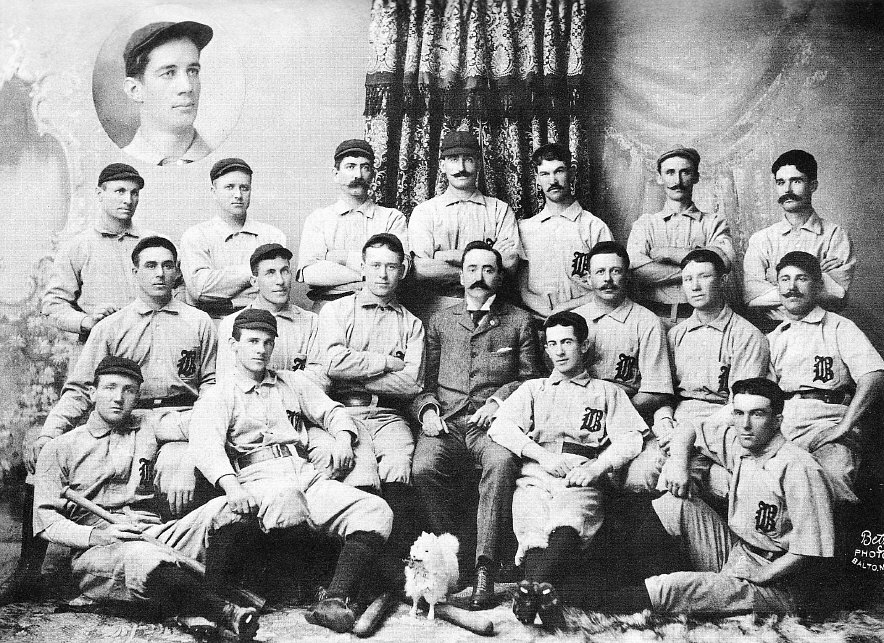
1896 Orioles Team

The 1896 Orioles. Keeler is in the front row, third from the left (with his elbow on his manager’s leg). Doyle is in the front row, far left, holding a bat.  Kelley is in the second row, third from the left.

The Orioles defeated the Browns that day 22-1. Twenty-eight hits.

(Over their past four games, the 2015 Orioles have scraped together 26 hits and 12 runs. Total.)

Keeler and Doyle are two of only 98 major league players to get six hits in a regular nine-inning game. They are the only teammates to do it in the same game.

1897 Orioles Program

Baltimore Orioles game program, 1897

The Orioles would finish the 1897 season second to Boston. Keeler would lead the league with a .424 average.

Those 1897 Orioles did not evolve into the present-day Orioles. They share only the name. (The 1897 St. Louis Browns were renamed the Cardinals a few seasons later. Yes, those Cardinals.)

(Those Orioles are also not the 1902 Baltimore Orioles that, through a cruel twist of fate, became the New York Yankees.)

They were one of baseball’s greatest teams.

And, Keeler was one of the greatest batters. His secret? “I have already written a treatise and it reads like this: ‘Keep your eye clear and hit ‘em where they ain’t; that’s all.’ ”

And, hang on to your ice cream …

UPDATE: Maybe Wee Willie Keeler wasn’t 6-for-6 after all. Here’s where I revisit the “facts” and change my mind about things: “The Official Table of the Slaughter”

A Cup Of Coffee On The 4th of July

“So, then, to every man his chance — to every man, regardless of his birth, his shining, golden opportunity — to every man the right to live, to work, to be himself, and to become whatever thing his manhood and his vision can combine to make him — this, seeker, is the promise of America.”   ~ Thomas Wolfe, You Can’t Go Home Again, 1940

Best I can tell, the first reference to a ballplayer having a “cup of coffee” – or a short stint – in baseball referred to New York Giant Fred Merkle. Yes, Bonehead Merkle.

Fred_Merkle_1908

Fred Merkle, Public Domain

It was in 1908 in a game versus the Cubs that Merkle neglected to tag second at the end of a game that the Giants thought they had won. Once the “boner” was revealed, negating the Giants’ winning run, the game was replayed and the Cubs won. (They went on to win the World Series, their last, in case you’re keeping track.)

It was after that first game that the New York Globe referred to Merkle, 19 and the youngest player in the National League, as “just getting his ‘cup of coffee’ in the league.”

Bonehead or not, Merkle lingered quite some time over his cup, playing more than 1,600 games over 16 seasons, including, ironically, his last six with the Cubs.  (I believe Starbucks would call that “cup of coffee” a Venti-sized career.)

The real “cup of coffee” players are those who play the shortest times in the big leagues. A game or two and not much more.

Fun Fact: We Americans will drink 400 million cups of coffee today. (I tried to figure out how much caffeine that was, because decaf is ridiculous, and I think it’s something like 500 billion mg. Really, math is not my strong suit, so I might be off by a billion or two.)

Funner Fact52% of coffee drinkers would rather go without a shower in the morning than give up coffee.

Just Plain Crazy Fact: French philosopher Voltaire was said to drink 40 to 50 cups of coffee a day.

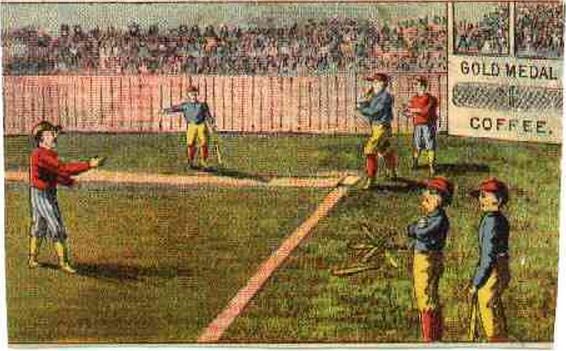
gold medal coffee trade card 1890s

Gold Medal Coffee Trading Card, late 1800s

Three major league players had their single game “cup of coffee” on the 4th of July. It’s strange there have been only three, and none, that I can see, since 1885.

When you play just one game in an era without ESPN and online box scores, it’s hard to know much about these guys. All I can tell you is this …

1882

The Baltimore Orioles played the Louisville Eclipse on July 4, 1882.

John Russ, a Louisville carpenter, may have played on a local team and had the opportunity for a one-day cup of coffee in the bigs when the Orioles came to town and needed a player to fill out the squad.

Russ, 24, played centerfield and pitched, giving up three hits and one earned run over three innings, and went 1-for-3 at the plate. This might not sound like much, but it could get you a solid million-dollar bullpen job with teams today.

The Orioles lost the game 7-1.

Russ was the son of immigrants, his father a blacksmith, his mother a candymaker. He never ventured from Louisville and is listed in its directories over the years as a carpenter, plowmaker, and woodworker in a plow factory, until his death in 1912 from cirrhosis.

1882 was the inaugural season for the six-team American Association and the Orioles finished dead last. Their record, 19-54, put them 32.5 games out of first.

1883

Charlie Ingraham got his shot with the Baltimore Orioles the next year on July 4, 1883.

He went 1-for-4 with a single, and had one error as catcher.

It was a doubleheader for the Orioles, playing the Red Stockings in Cincinnati.

Baseball Caps Late c 1889 Spalding Guide

Spalding Guide, 1889

The Orioles lost the first game 14-2 and won the second 8-7. Since we don’t know for sure which game was Charlie’s, let’s just let him win, ok?

Ingraham was an Ohio native living by then in Chicago. He’s another case of a player who may have gotten scooped up by the Orioles for that one day, so that they could field enough players for the two games.

In 1880, Ingraham was listed as a medical student in Chicago. This would mean he was planning to follow in his father’s footsteps. His father was a prominent physician and medical lecturer whose death in 1891 was covered by the Chicago Tribune.

In the obituary, his son C.W. – our Charlie – is listed as a ballplayer in the Northwestern League, a minor league that had folded four seasons earlier.

Things don’t often work out the way you think they will when you’re young, and when C.W. succumbs to pneumonia at age 46, he is neither a doctor nor a ballplayer. He is listed on his death certificate as a “stage carpenter.”

The Orioles finished last again in 1883 – 28-68 and 37 games out of first.

1885

Bill Collver, just 18, played his one and only big league game for the Boston Beaneaters on July 4, 1885.

An outfielder, he went 0-for-4 at the plate that day, with one strikeout.

Spalding Baseball Guide 1885The Beaneaters were in the middle of a roadtrip – a grueling one by today’s standards – that had begun on June 23 and would go through July 17. On July 4, they played a doubleheader against the Detroit Wolverines, losing the first game 8-3 and the second 11-6.

It’s unclear which loss Collver played in, but it’s likely that the Beaneaters, like the Orioles before them, just picked up Collver from a local team to help fill out their roster.

Collver didn’t have much beyond that cup of coffee. He died in 1888, still in Detroit and just 21, of a “spinal disease,” which could mean meningitis, of which there was plenty in Detroit, or who knows?

The Beaneaters finished their season 46-66 and finished fifth and 41 games out of first in the National League.

___

The sad thing about a cup of coffee in baseball, is that someday it’s gonna be your last. And, unlike Mariano Rivera, Cal Ripken, and the other greats who chose when and where to drink their final cup, for most players, with names you’ll never know, the pot is emptied before they’ve had their fill.

So, here’s to John and Charlie and Bill who had their cup of coffee, who lived the American Dream, even if it maybe wasn’t what they planned, and who are still remembered 130-some years later for just one day, just one game.


“Soon No Off Season”

off season 1

© The Baseball Bloggess

“Pretty soon the ball player will not have rest enough between seasons to get acquainted with his folks.” ~ The Sporting News, November 7, 1912

In response to The Daily Post’s weekly photo challenge: “Off-Season.”

They call it “The Grind.” That long baseball season. That life ballplayers choose.

For the pros, it begins in February at spring training and, if you’re lucky, it will extend to the far reaches of October.

College ball starts in February and stretches through four months, then summer league teams, and a “bonus” fall season tucked in before the snow falls.

Whatever’s left, that’s your “off-season.”

I thought “off-season” was a baseball term that had worked its way into the rest of the language. But, “off-season” is a business term that was first used in the 1840s.

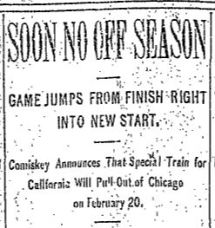
soon no off season 1912 headline november 7 1912

The Sporting News, November 7, 1912

In 1912, The Sporting News complained that Charles Comiskey, President and Owner of the Chicago White Sox, was running his players ragged by shortening the off-season and putting his team on a train to California in the middle of February to begin spring training, forcing his players into exhibition games along the way, stopping at any place where a pick-up game might put extra “coin” into the owner’s pocket.

We don’t lay fallow much. There’s not much off-season for anybody these days. Apparently, there never was.

off season 2

© The Baseball Bloggess

Photo: Davenport Field, The University of Virginia, Charlottesville, Virginia. The end of the “Fall Ball” season. © The Baseball Bloggess


The Babe & Bruce. Shreveport, 1921.

When Ruth, the mighty Soccaneer,
Stands up to sock the ball,
The throng is bound to raise a cheer
No matter what befall.
It thrills the vast and noisy crowd
To see a four-base clout.
And yet the cheer is just as loud
When someone strikes him out.

~ John B. Sheridan, Sportswriter | March 1921

Babe Ruth 1921

Babe Ruth, 1921. Public Domain.

When Babe Ruth, the home run hero of 1920, arrived at Yankees’ spring training in Shreveport, Louisiana in March 1921, he was out of shape and overweight.

He was, The New York Times said, the “Bulky Babe.”

The Sporting News was less poetic. The Babe “is fat and is working like a coal heaver to get in shape.”

pablo

(See, Panda Bear, you weren’t the first chubby to turn up at spring training.)

But, that didn’t stop several hundreds of Shreveport fans from turning out to greet Babe Ruth at the train station when he arrived in town on March 5. Shreveport had America’s biggest celebrity in their midst.

Arrival of Ruth NYT 3 6 1921

New York Times, 3/6/21

He fought his way past the cheering crowd and made his way to his hotel, The Sporting News reported, “where he was sat upon by scores of kids, who followed him to his room and were not satisfied until all had shaken hands and the Babe had shown them how he hit home runs by batting imaginary balls over the chandelier.”

The Babe, looking all jaunty. 1921, Shreveport

Public Domain

Babe Ruth in Shreveport, March 1921. 

During his month in Shreveport, the citizens showered him with gifts, and turned out at games – and practices – by the thousands. A local Essex car dealer gave him a car to use during spring training. The license plate read simply: “Babe Ruth’s Essex.” (“Babe Ruth’s Essex” was found one morning abandoned in the middle of the street when Babe rode off with someone else during a night of carousing.)

richmond times dispatch 3 13 21

Richmond Times-Dispatch, 3/13/21


1921 essex

A 1921 Essex.

But, I’m just using the Sultan of Swat to lure you in. He’s not the star of this post. Bruce Price is.

Price was 24, a local, pitching for the Shreveport Gassers, a Texas League team.

Think of the Gassers as the Washington Generals to the Yankees’ Harlem Globetrotters. Just a small town practice squad for the Yankees to feast on that spring.

Two years ago, I wrote about unusual spring training spots, including Shreveport.

Last November, I found this comment at the bottom of the post:

janets quote2

It’s easy to write about Babe and the ’21 Yankees who, historian Robert Creamer wrote, “roared into that Louisiana city like cowboys coming to town on Saturday night.”

Broads. And booze. Abandoned cars. And Ruthian home runs that sailed over outfield walls and into the streets. That broke the windows of passing street cars.

(I had you at broads and booze, didn’t I?)

But, maybe it’s time to write about the Shreveport pitcher who got the Babe out.

So I sent an email to Janet Johnson who wrote me right back.

She confirmed that it was her grandfather, Bruce Price, “Papa Bruce” to family, who struck out Babe Ruth.

Bruce Price

Bruce Price. Courtesy of Janet Johnson.

He was a smallish pitcher – maybe 5’8” and 150 pounds or so. A righty.

“My dad says Papa would go pitch for teams in little towns in the area.  He also said he played baseball at Louisiana Tech one year but never went to class,” Johnson said.

Price had a wicked curve. He told folks he “could throw a baseball and make it curve through the crook of a stovepipe without ever touching metal.”

Like this.

It may have been that curveball that buckled the Babe.

But, the box score from that March 12, 1921 game, like many family memories, had gotten a little fuzzy with age.

NYT March 13 1921 Yankees Shreveport Box Score

The New York Times, 3/13/21

 Fun Fact: That’s not how you spell Shreveport.

Turns out, Price hadn’t struck the Babe out twice. But, there’s still a story to tell.

The Gassers starting pitcher was shelled that day, giving up six runs over three innings. Price came in in relief, pitching the 4th, 5th, and 6th. He pitched three scoreless innings and faced Ruth once, getting him to hit a weak infield grounder that Price easily fielded.

If you want to quibble about a strike out’s value over an infield out, go ahead. An out’s an out, if you ask me, and I think Price did Ruth a favor by making him leg out a play to first. After all, it was early in the spring and Ruth still had 20 pounds to lose.

The fans had come to see Babe Ruth, but as the game went on they began to cheer their hometown boys instead, especially when the Gassers got Ruth out.

Despite Ruth’s 0-for-5 day, the Yankees won 7-3.

Bruce Price’s ERA? 0.00

Price Pitching Line 3 12 21

In 1983, Wiley Hilburn of The Shreveport Times wrote that the Babe asked about Price after the game. “Who is that narrow [bastard]?” and later told a reporter, “I like that little Price.”

Decades later, Price described how he pitched Ruth: “It was inside low and inside high. … He would take one step with his left foot toward me, and then bring his right foot around to swing. I’d hesitate with my throw and try to throw his timing off.”

The Babe bounced back the next day in Ruthian style, going 6-for-6 – three homers, three singles – and the Yankees stepped on the Gassers 21-3.

New York Times

The New York Times, 3/14/21

(The Gassers did finally take one from the Yankees, 3-2 in 11 innings, on the last game of the spring.)

Price played a few more years on local teams, got married to a girl named Maggie, had four children, farmed, and drove a school bus.

“He never passed up an opportunity to go fishing,” Johnson told me. “He absolutely loved being out on the lake — any lake — but would not eat fish at all. He liked his coffee so strong that my mom would boil some water to dilute hers when we came to visit.”

He rarely missed church on Sunday, played the harmonica, and raised a family that stayed close to home.

“Everyone who knew Bruce just loved him,” Johnson said.

Johnson’s father – Price’s eldest son – retired back to the old home place not so long ago. The original house is gone now. “It had a porch across the front and a steep tin roof,” Johnson said. “I can’t remember exactly when they got a bathroom, but it was in my lifetime. Before that, it was a trip to the outhouse, and a bath in a tin wash tub in the back room, with well water heated on the stove. My uncle Bob lived nearby his whole life, and my two aunts married Air Force men but eventually came back home. Uncle Bob died a few years ago, but all of them have stayed close to the church and community, as have many of my cousins.”

Baseball still runs in the family. Many of Bruce Price’s children, grandchildren, and, today, great-grandchildren played in high school and some into college. One great-grandson – also a righty pitcher – played at Southern Mississippi about 10 years ago, was drafted by the Kansas City Royals, and played a season in the minors before being sidelined with an injury.

Bruce Price died on March 25, 1983. He was 86.

Babe Ruth hit 714 homeruns over 22 seasons. He was a career .342 hitter. It took a great pitcher to get the Babe out.

Bruce Price was one of them.