Two “Inglorious Defeats” & A Somber 4th of July

Twice Beaten Buffalo Morning Express July 5 1881

Buffalo Morning Express, July 5, 1881

There’s a lot of baseball on the 4th of July.  Playing baseball on Independence Day is a tradition that goes back more than a century – pretty much as long as baseball has been baseball.

All 30 big league teams will play today (weather permitting). There will be hundreds more playing in the minors, college summer leagues, kids’ leagues, and pick-up games. There will be a lot of baseball.

This is not about any of today’s games. (Except to say, “Good luck, Orioles. Don’t screw this road trip up any worse than you already have.”)

1881 was as good a 4th of July as any for baseball, I figured.

Because there were two games in Buffalo that day, along with two in Detroit, that marked the first-ever major league doubleheaders specifically created to take advantage of a holiday.

Mickey Welch

Public Domain

Troy Trojans Pitcher Mickey Welch

Because future Hall of Fame pitcher Mickey Welch of the Troy Trojans pitched both of those games against the Buffalo Bisons – complete games, winning both, including a three-hit shut-out in the afternoon.

Because, that 4th of July also was Welch’s 22nd birthday.

Game One: Troy Trojans – 8  Buffalo Bisons – 3

Game Two: Troy Trojans – 12 Buffalo Bisons – 0

There are no box scores from that game.

Well, that’s not exactly right. There are box scores. I just can’t read them …

Troy at Buffalo Game 1 July 4 1881

Game 1 Box Score. Buffalo Morning Express, July 5, 1881

Pitching was different in 1881. Complete games – and two-man pitching rotations – were as normal then as worn-out bullpens and six-inning “quality starts” from your ace are today.

Troy Trojans unknown date

Public Domain

Troy Trojans, early 1880s. Welch may be the player seated at the far left.

Troy was a pretty lousy team with few hometown fans. So, the owners agreed to move a July 5 home game to fill out the Buffalo doubleheader. The teams would make more at the gate in Buffalo on a holiday then they could ever make in Troy on a Tuesday.

The story should end there:

The 4th of July. A Monday, just like today’s.

Mickey Welch – “Smiling Mickey,” the future Hall of Famer with the friendly demeanor and an assortment of quirky underhand curves – pitches 18 innings and wins two complete games in baseball’s first holiday doubleheader.

On his birthday. On America’s birthday.

Smiling Mickey Welch Baseball Card

I love that story.

Except for this.

As in all things, baseball doesn’t exist in a vacuum.

NYTimes July 3 1881 Garfield Shot

New York Times, July 3 1881

Two days earlier, President James A. Garfield was shot at a train station in Washington, DC.

President James Garfield

Public Domain

President Garfield

If you know your high school history, this will all sound vaguely familiar. Just three months into his Administration, a deranged office-seeker shot Garfield twice – once in the arm and once in the belly. And, if you remember your medical science classes, you might recall that Garfield died two months later, not from the actual gunshot wounds, but from infection caused by the virtually nonexistent sanitation practices of the time and all the unwashed, dirty fingers that doctors used to probe the belly wound.

This lets a lot of the air out of an otherwise sweet 4th of July story.

The country was in shock. Citizens clogged city streets near newspaper and telegraph offices to get the latest news on the condition of the President.

His “condition” depended on the newspaper …

Washington Evening Critic July 4 1881 Garfield Critical But Not Hopeless

NY Times July 4 1881 Every Hope of Recovery Garfield Improving

Buffalo Evening News July 4 1881 Hope Is Dead

Washington Evening Critic, New York Times, and Buffalo Evening NewsJuly 4, 1881

Many cities cancelled their Independence Day fireworks and events out of respect.

Buffalo called off its military parade. The city’s annual boating regatta went on as planned because, organizers agreed, the President seemed to be doing better by Sunday, and the weather was supposed to be perfect.

BuffEveNews 7 5 1881 how Independence Day was Celebrated in Buffalo

Buffalo Evening News, July 5, 1881

The Regatta, a Pigeon Shoot, and the Independence Day revelry of people shooting at each other went on as scheduled in Buffalo.

Despite the somberness of the weekend, people tried to get back to normal.

Baseball went on as planned and more than 4,000 fans attended the games against the Trojans at Buffalo’s Riverside Park.

“In the afternoon the stands were filled to sardine compactness and the assemblage was very enthusiastic,” according to the next day’s Buffalo Morning Express.

Troy surprised the Bisons. “It does seem ridiculous that such a motley combination of base-ball talent should be able, when they play in this city, to do such good work as the Troys,” The Express reported.  “The [12-0 afternoon game] was a disgrace to the name of the Buffalos. … Welch was too much for the home club.”

The 4th of July wins were rare ones for the Troy Trojans. They finished the season in fifth place in the National League, with a 39-45 record. Twenty-one of those wins belonged to Welch.

President Garfield never recovered. He died on September 19.

The Troy Trojans folded the following season and Welch went on to become a star with the New York Gothams, whom you may know today by the nickname which ultimately stuck with them – the Giants.
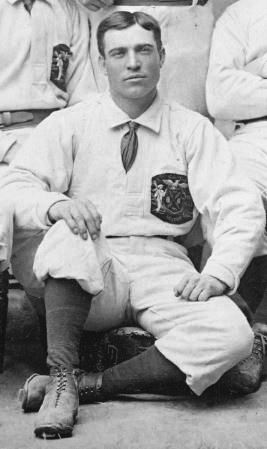
Mickey Welch with NY Giants

Public Domain

After finishing his playing career – amassing 307 wins and a career 2.71 ERA — Welch went on to run a hotel and saloon and then a dairy business, before returning to baseball as a gatekeeper and attendant at both the Polo Grounds and Yankee Stadium.

Mickey Welch died of heart failure, at age 82, on July 30, 1941. On his death certificate his “Usual Occupation” was listed as this: “Baseball player.”

Death Certificate July 1941 Mickey Welch

ancestry.com, New Hampshire Death Records

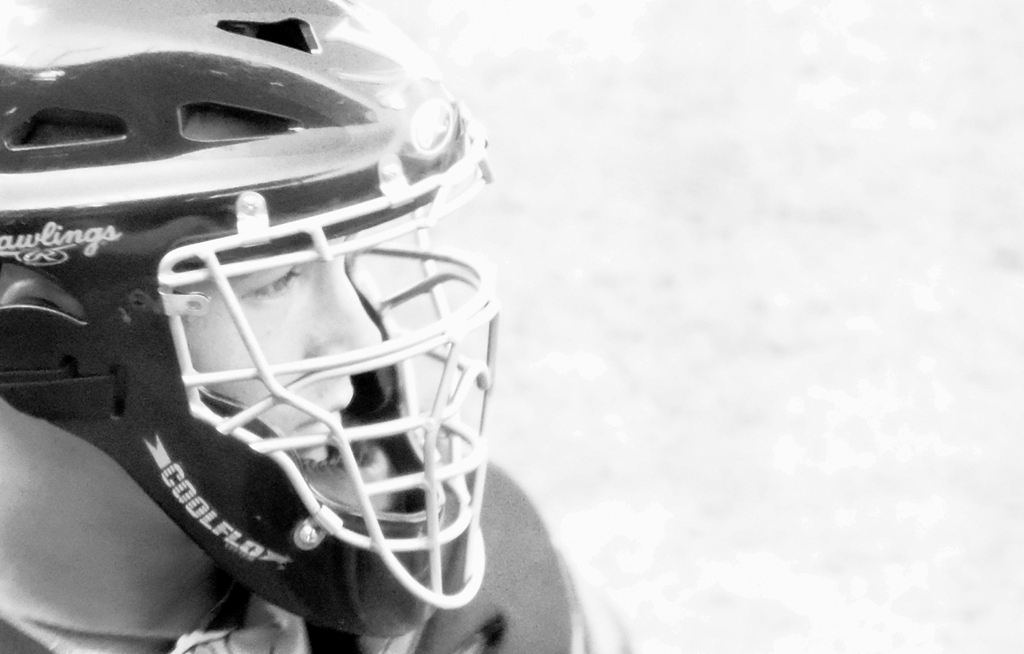
The Face Behind The Mask


Thaiss 2015

“You have to have a catcher because if you don’t you’re likely to have a lot of passed balls.” ~ Casey Stengel

In 1876, Fred Thayer, the team manager of Harvard’s baseball team, took a fencing mask, tinkered with it, and turned it into baseball’s first catcher’s mask. It didn’t take long for other catchers to catch on.

Thayer patent

Thayer’s original catcher’s mask patent.

Fans, according to The New York Times, hated the innovation, considering a protective mask a sign of weakness. They jeered at catchers who wore them.  (Batting helmets? Shin guards? Thumb protectors? Today’s game would drive our great-great-great grandparents nutty.)

The mask annoyed fans, but it changed the game. It allowed catchers to be much closer to the batter. It allowed pitchers to amp up their pitches without worrying about killing their catcher with an errant throw.

By 1878, Spalding had added it to their sporting goods’ catalog.

spalding

Goat hair and dog skin. $3.

Today’s best masks can run to more than $100. (Which, if you ask me, is a pretty small price to pay to keep your nose, cheekbone, and brain intact.) No more dog skin either. Progress.

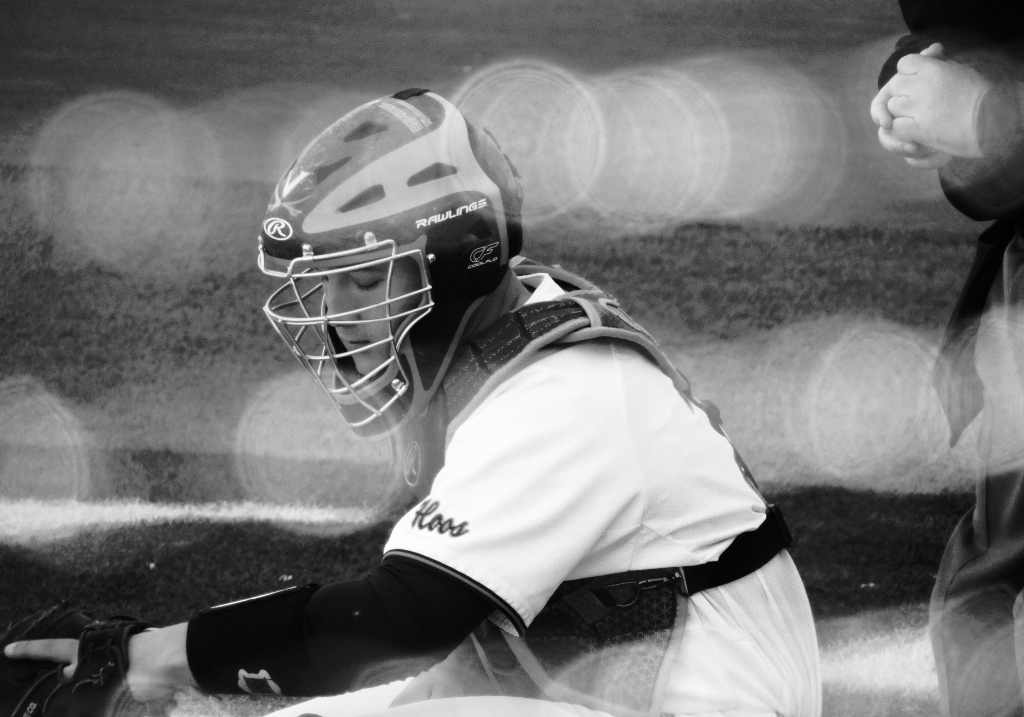
It’s hard to know what’s going on behind those “tools of ignorance.” It’s hard to see a catcher’s face, especially way out in the bleachers.

Thaiss 2016

Matt Thaiss, gritty catcher for the University of Virginia, is tough as nails.

“He won’t give up,” UVA pitcher Alec Bettinger told The Daily Progress last week. “He could have his legs chopped off and he’d still go out there and catch. He’s just the toughest guy on the team.”

But, sometimes, when you look inside the mask …

Matt Thaiss March 2016

… he seems almost angelic.

Which just goes to show …

I don’t really know what it goes to show.  But, sometimes the face you find behind a mask isn’t always the face you expected to find.

In response to the Word Press Daily Post Photo Challenge: Face. See more challenge photos here.

Photos: University of Virginia, Charlottesville, Virginia. 2015-2016 © The Baseball Bloggess


Rainy Day Review: “The Iowa Baseball Confederacy”

“There is no urgency to the game. Even in the pouring rain, there is the same easy lethargy of a sunstruck afternoon where bodies are bathed in sweat rather than rainwater.” ~ W.P. Kinsella, The Iowa Baseball Confederacy

I wrote about rain delays a week ago. It has rained here in Virginia every day since.

It is raining now.

The grass has grown up over my ankles and gone to seed, but it’s too wet to mow. The garden is a square box of mud, but it’s too wet to sow.

wheres gnomie

© The Baseball Bloggess

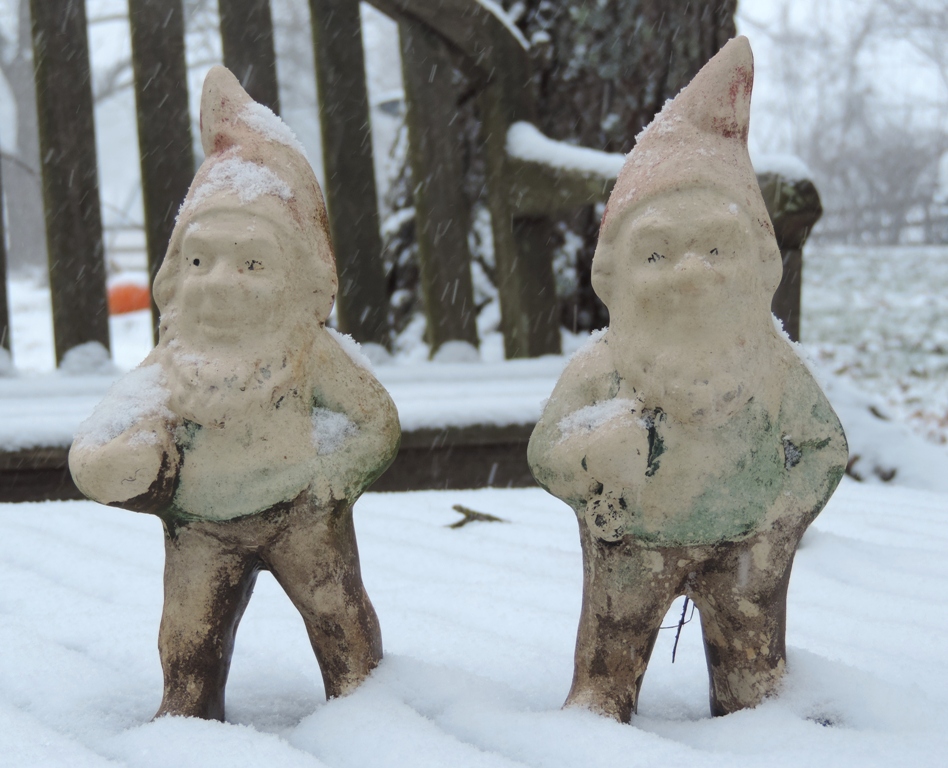
The grass has even overgrown the garden gnomes.

Everything’s a little slimy. My hair is rain-flattened and the screen door at our house has swollen itself shut. There is, I am not kidding, a palm-sized frog now living in a mud puddle in the middle of our road.

The rain on the tin roof at my studio in town has gone from “I love the sound of rain on a tin roof” to incessant and aggravating.

Baseball goes on in most other places. But, nothing much is going on around here.

It’s cold and wet and dreary and a little sad outside. It’s a good day to curl up with a book.

Continue reading

“Due To Weather & Field Conditions …”

Rain Out in Richmond

On Friday, I wrote about rain delays and rain outs.

Two days later, what are the chances?

Game Postponed May 1 2016

Seriously?

Maybe I jinxed today’s game …

Tarps on the Field

… Because it was pouring rain by the time we got to Richmond.

Superstitions and jinxes like this run deep in baseball.

Charms On The Ball Field NYTelegraph 1910

New York Telegraph, 1910

In the early years of baseball, players would bury all sorts of lucky charms – especially rabbits’ feet – under home plate and all over the outfield.

Continue reading

“Seeing Home” on Only A Game

I have to be at my office by 8 on some Saturday mornings. Those are Saturday mornings that might otherwise be filled with sleeping in and lazy breakfasts and reading the box score from Friday night where my team wins …

Orioles final

Nope. 

uva over miami

Look! Virginia beat #1 ranked Miami last night. How about that!

But, when I’m up and out early on Saturday, I get to listen to the sports program Only A Game on National Public Radio during my drive to the studio.

Almost every week I hear a story and think, “I really wish you could hear this.” And, by “you,” I really do mean you – whoever you are. I mean “you” … everybody.

Today’s show deserves your ears.

Ed Lucas has interviewed ballplayers since the 1950s.  And, as Only A Game explains: “Ed has been completely blind since October 3, 1951. He lost his sight after taking a line drive to the head on the same day his beloved New York Giants won the pennant.”

Ed Lucas and Willie Mays

Only A Game

Ed Lucas Interviewing Willie Mays in 1957.

“Friendships between writers and ballplayers aren’t common,” Only A Game notes, “but in baseball broadcaster Ed Lucas, players saw someone who had struggled as hard as they had — if not harder — to get to where he was.”

Ed Lucas’ story is a story of … how, as a small boy and newly blind, he met Yankee Phil Rizzuto, who took him under his wing … how Leo Durocher opened the Giants’ clubhouse doors to him, as a favor to Ed’s mom who thought a visit with baseball players would cheer him up … and of how his life blossomed despite blindness. It is a story of baseball and of family.  It is beautiful.

You can listen to, or download, the story here.

only a game


“Charlottesville Is No Spot For A Writer Of Baseball.”

Charlottesville is no spot for a writer of baseball Washington Post 3 13 1912

Washington Post, 1912

Here’s what baseball writers will tell you about spring training in Charlottesville, Virginia.

It snows and hails and thunders and pours rain and gusts wind and freezes and scorches. There are plenty of lousy days for baseball and very few good ones.

Those writers, roaming around Charlottesville more than 100 years ago, won’t tell you much about the baseball they saw, but they’ll give you an earful about the rotten weather.

During Virginia’s hybrid time of still-winter-not-yet-spring – spwinter! – there’s no telling what any day will bring.

snowcat

March 2016. © The Baseball Bloggess

Snow.

March weather in Charlottesville is like a grab bag at the dollar store – you’ll get something for your dollar, but you’ll probably look at it and think, “Really? I paid a dollar for this?”

So why did so many teams from 1892 to 1916 come to Charlottesville for spring training? Were they nuts? Or were the grumpy old baseball writers just annoyed that they had to spend a month in a place which was often snowy and always alcohol-free?

Today, baseball’s spring training is held in Arizona and Florida, more accommodating and predictable climates, and where the only things you have to worry about are swarms of bees and the Zika virus.

But, Charlottesville? “More fickle weather could not be found in any part of the globe,” one Washington Post reporter lamented in 1914 after an early March snowfall.

Who would choose Charlottesville for spring training?

These teams …

In 1894, the Baltimore Orioles came through Charlottesville as part of a nomadic spring training tour through the south and took both games against the University of Virginia. The Orioles, then part of the National League, went on to win the pennant. They were a powerhouse, those Orioles. Yup, chew on that O’s fans. A powerhouse.

In 1901, the Boston Red Sox (then called the Americans) spent spring training in Charlottesville. It was the Sox’ first season and, history will show that the first game ever played by the Red Sox, the first ball they ever hit, and the first run they ever scored, happened in Charlottesville.

There were a few others, but it was the Washington Nationals that spent the most springs in Charlottesville. They were officially the Washington Senators, but everyone called them the Nationals and so should you.  (Although today we call them the Minnesota Twins.)

The Nats “springed” in Charlottesville in 1905 and ‘06 and then again, under manager Clark Griffith, from 1911 through 1916.

Embed from Getty Images

Griffith (third from the right) and his Nationals in Charlottesville. March 1915.

Griffith, today enshrined in the Baseball Hall of Fame, told reporters each season that his choice of Charlottesville over warmer locales was purely strategic.

Continue reading

An Umpire’s Valentine

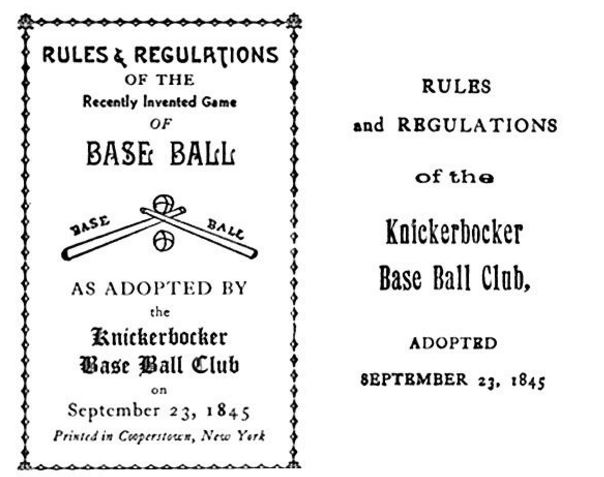
knickerbocker rules

Before baseball even got to the bases, innings, or outs, there was an umpire:

Rule #2 of baseball’s “Knickerbocker Rules” (1845):

When assembled for exercise, the President, or in his absence, the Vice-President, shall appoint an Umpire, who shall keep the game in a book provided for that purpose, and note all violations of the By-Laws and Rules during the time of exercise.”

The only thing more important than an umpire? Rule #1 which reminds players to “strictly observe the time agreed upon for exercise, and be punctual in their attendance.”

So, let’s give umpires some love on Valentine’s Day …

First, don’t call it a clicker.

“[A] ball and strike indicator … figured in my very first lesson in how to be a professional umpire: Never call it a clicker. (Why? Nobody ever said, but, I guess it’s like an opera singer’s not referring to an aria as a song.)”  ~ Bruce Weber, As They See ‘Em: A Fan’s Travels In The Land of Umpires

ball strike indicator

Not a clicker.

Don’t call the Umpire “Blue.”  It’s just rude as it was once a heckle and it was spelled “Blew” – as in “Hey, Blew, you blew the call!”

Embed from Getty Images


Don’t slug the umpire, even in the name of poetry.

Mother, may I slug the umpire
May I slug him right away?
So he cannot be here, Mother
When the clubs begin to play?

Let me clasp his throat, dear mother,
In a dear delightful grip
With one hand and with the other
Bat him several in the lip.

~ Anonymous, Chicago Tribune, 1886

Continue reading

Blizzard, Snow, and My Garden Gnomes

gnome ankles 1 pm

“With the tail-end of that dreadful Northwestern blizzard rattling the windows and doors and the ground partly covered with snow and ice, it is rather difficult to compose an original article on baseball.” ~ The Washington Post, January 22, 1888

Before we get to my garden gnomes …

I wish I could tell you something about Jack Blizzard, who pitched nine games in the Texas minors in 1954. But, there’s nothing much to tell. No one knows much about Jack Blizzard. Or, if they do, they’re not talking.

He pitched nine games or so for the Plainview Ponies and the Abilene Blue Sox. These were Class C teams in the West Texas-New Mexico League. He was from Sulphur Springs, Texas. He was 19. He was a lefty.

Other than that, there’s not much to tell; just a few mentions in The Abilene Reporter News in the spring of 1954.

He first appears on April 28, playing with Plainview. He came into a game as a reliever and pitched part of the 8th. No runs.

On May 8, now with Abilene, he was one of four Blue Sox relievers who struggled through the 4th inning versus the Pampa Oilers; together the four relievers gave up seven runs in that inning. The Sox lost 12-4.

On May 20, another loss, this one to the Clovis Pioneers 9-3, and Blizzard came in to eat up the last 4.1 innings, holding the Oilers to just 3 hits, no runs.

May 25. Double-header, two losses, and two relief appearances from Blizzard who gave up one run in his second game of the day.

June 1. Another Blue Sox loss. Blizzard comes in in the 9th and walks two. On June 21, the Blue Sox send him to Oklahoma City.

And, he disappears. Leastways, I can’t find him.

He could very well be Jack Blizzard of Nederland, Texas, a former salesman, who passed away in 2009. His obituary doesn’t mention the spring of 1954 or baseball, but all the other details fit.

Today would be a good day to talk about Jack Blizzard, when there’s nearly two feet of snow outside here in Virginia.

Continue reading

Chris Davis & The Unjilted

Chris Davis Baseball

Being jilted is no fun.

Which is a shame because “jilt” is a fun word.

Let’s go a’jilting!

It’s a jiltingly beautiful day, let’s have a picnic.

But, language is fickle and being jilted, of course, is no fun at all.

(If you haven’t been jilted – by a date, a boyfriend or girlfriend, or even a fiancé  – you are a rare bird, or a bird with selective memory. You can keep reading, Unjilted One, but this won’t be as meaningful for you.)

So, what to do if you thought you were jilted … but you discover you weren’t? Not jilted. Unjilted. Ajilted. Non-jiltified.

What if you’ve already moved on only to discover that you weren’t jilted after all?

On Saturday morning, reporters learned that Baltimore Orioles first baseman (sometime right fielder and one-time winning pitcher) Chris Davis had re-signed with the club.

Embed from Getty Images

Welcome back to Baltimore, Chris Davis! 

(I’m not sure I can even welcome you back, “Crush”, because, as it turns out, you never really even left.)

Re-signed and resigned are two different things which is extremely hard for some writers to understand.

Continue reading

Yoo-Hoo!

To fall in love with baseball is to fall into the past, as far back as you can remember it when you were a child, and even further than that if you can.

To fall in love with baseball is to fall in love with people and places and games that are from times that are much older than you, places you’ve never been to, and games that are now just box scores on paper.

Baltimore Orioles Defeat NY Giants 8 5 1896

Baltimore Orioles beat the NY Giants 10-4. August 5, 1896.

Embed from Getty Images

Wee Willie Keeler. 1907.

To fall in love with baseball is to be in love with a game that has a history and a culture that is nearly 200 years old. It has changed and evolved and changed back again, but, it’s still pretty close to what it was right from the start.

(When the main thing that people still argue about is the designated hitter rule, you know that things really haven’t changed all that much.)

Continue reading