During the 1930s, Babe Ruth, one of the most famous men in America, would dress as Santa Claus at Christmastime and distribute gifts and meals to children and families in need.
George MacKay describing Jim Sullivan in The Philadelphia Inquirer, March 21, 1922.
Public Domain
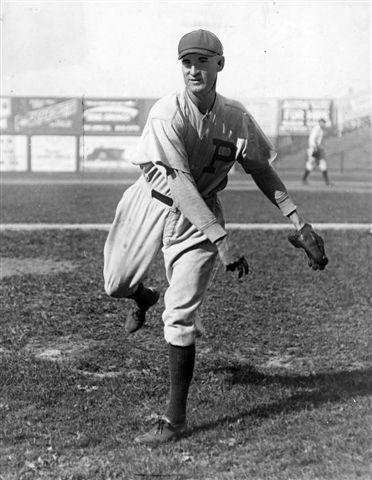
Sullivan pitching with the Philadelphia Athletics, 1922.
Jim Sullivan’s story is that of a 1920s-era right-hander who never could figure out how to control his fastball. (George MacKay’s rhyme was really just wishful thinking). It’s also a tale of three cities. And, a story about a cow wearing a Christmas hat.
(If the promise of a cow wearing a Christmas hat doesn’t keep you reading, then, clearly, you’re not the person I thought you were.)
Jim Sullivan was born in Mine Run, Virginia in 1894.
Here.
The Sullivan family didn’t settle forever in Mine Run. By the late ‘teens, Sullivan is playing professionally and his family is in North Carolina. Later, he spends an off-season with his father in Kentucky.
Sullivan’s big league career is rather brief.
He played parts of the 1921 and ‘22 seasons with the Philadelphia Athletics and two games with the Cleveland Indians in 1923.
Public Domain
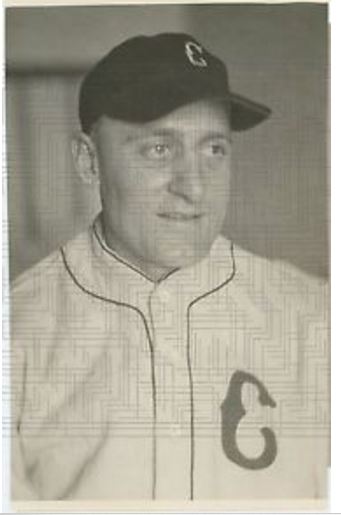
Sullivan, with the Indians (briefly) in 1923.
Twenty-five big league games total, 73.1 innings pitched (all but five with the A’s), an 0-5 record, a 5.52 ERA, and a reputation for wildness.
(Keep reading. I promise … Christmas Cow is on the way …)
During the World Series, Francisco Lindor of the Cleveland Indians stole a base, and, because of that, Taco Bell promised everyone in America – all 319 million of us – a free taco.
(That’s 54-billion delicious taco calories!)
When @POTUS is in on it, you know it’s a big deal.
When a ballplayer’s career in the majors is brief – just a game or two – he is said to have had just “a cup of coffee” in the big leagues.
So, if your time in the town where you were born was brief, does it become your “cup of coffee” hometown?
Clay Bryant had more than a “cup of coffee” with the Chicago Cubs.
The right-handed fastball pitcher spent about six seasons with the Cubs – from 1935 through 1940 – including their pennant-winning and World Series-losing 1938 season.
It’s his birthplace that’s the cup of coffee in this story.
Bryant was born in 1911 in Madison Heights, Virginia.
He wasn’t there long. Maybe a year – or a couple of years at most – before the family moved to Birmingham, Alabama, where his father found work as a pipe fitter. And, that’s where they stayed.
But, being born in Virginia, cup of coffee or not, gets you on my Virginia-Born Project list, even if everyone in baseball forever knows you as “the big, curly-headed kid from Alabama.”
Bryant dropped out of high school when he was 16, and left Birmingham to work his way through the minors. He was called up and played a few games for the Cubs in 1935, and settled there in 1936, where he played until his arm finally gave out in 1940.
Cubs fans who know their history remember Bryant for just one season – 1938.
In 1903, a mail train departing from Monroe, Virginia derailed 80 miles away in Danville.
Monroe, Virginia
This may not be something you know anything about. But, it was one of Virginia’s worst train crashes and is retold in the old country song, “The Wreck of the Old 97” that Johnny Cash once covered.
The derailment, the result of excessive speed and trying to keep the train and the mail on schedule, killed 11.
That pretty much sums up all I knew about Monroe. (And, to be fair, even that is mostly about Danville and when we get to Danville on this Virginia-Born Project, I’m sure you’ll hear about it again.)
That train wreck 80 miles away may be all anyone knows about Monroe, Virginia, because, if you set your GPS to Monroe, it will lead you off Business Route 29 and to an empty and desolate rail yard.
(You’re going to have imagine some train tracks running through a spooky, empty field. Editor/Husband told me to take a photo of the tracks. I said we didn’t need to bother because I was sure that we would find something better to show Monroe. I should listen more to Editor/Husband.)
When cities start to sprawl, the one-time little towns that were out on the edges start to dissolve or just get absorbed into a ghostly kind of suburbia. Who needs a grocery store when the big city, in this case Lynchburg, is just 10 minutes away?
We found railroad tracks, houses, churches, and a community center.
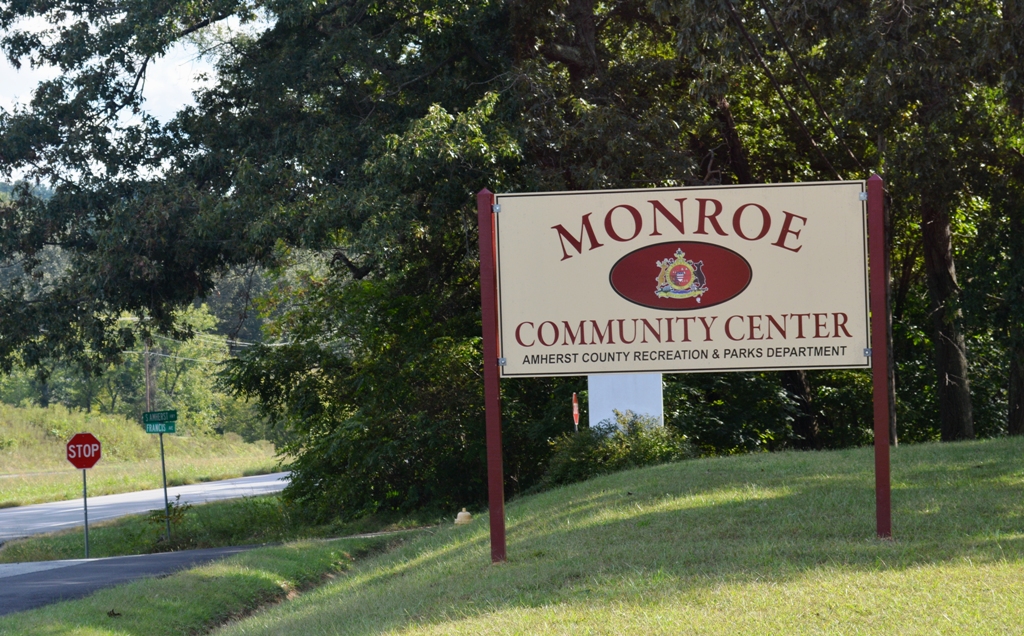
In case the GPS was lying, this sign is the only proof that we actually visited Monroe.
Monroe seems to be split today by Route 29, the four-lane highway that will take you south to Lynchburg in just a few minutes, or Charlottesville, about an hour north. Houses cluster on both sides of the highway.
Editor/Husband: “There’s a lot of Monroe, and there’s not a lot of Monroe.”
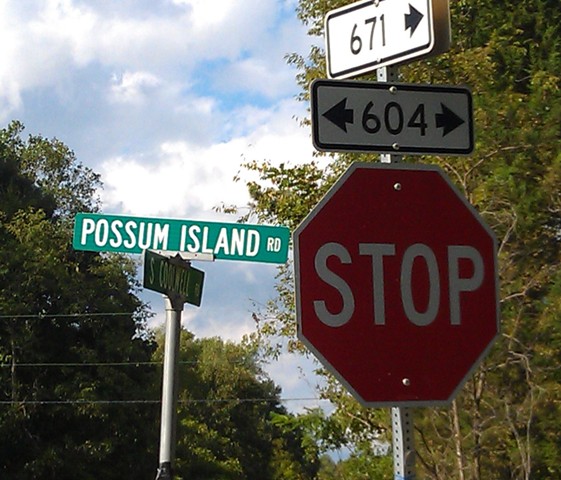
While an island filled with possums sounds delightful, this sign was just a cruel tease. We saw no possums or island on this road.
Monroe was also the birthplace of Ken Dixon, who was born there in 1960 and pitched for the Baltimore Orioles between 1984 and 1987.
Somewhat unrandomly, I’ve ended up in a little town just 25 minutes away from our house – a place I’ve been to scads of times.
Not exactly out seeing the unseen world, but you gotta start somewhere.
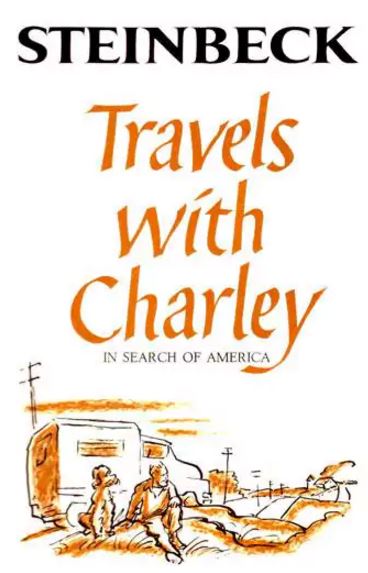
What were you expecting, John Steinbeck? (Steinbeck made up a lot of Travels with Charley, you know. He said he listened to the Yankees-Pirates World Series while driving around with his dog in the fall of 1960, but now I’m not even sure that’s true. In any event, I’m not making up any part of my trip to Gordonsville, Virginia.)
Eliot didn’t mean baseball. If he had he would have said August.
But, Eliot was a baseball fan and, it’s said, his heart was broken when his team, the Red Sox, sold Babe Ruth to the Yankees in 1919.
So, yeh, he knew cruel.
(Hemingway once slammed Eliot’s writing by telling a friend that Eliot “never hit a ball out of the infield in his life.” Also cruel.)
The Baltimore Orioles are slowly tumbling down the AL East ladder.
They’ve been looking increasingly listless and pitiful, like a ratty old tomcat trying to hack out a hairball. So much hacking and all that comes out is a desperate, sad noise that sounds, best I can translate, something like, “Ggggackuck [brief pause] Aahkgggackuck [longer pause] geeeeeeack.” Then he stops, swallows, shakes his head, and starts all over again.
I mean, you still love that ratty old tomcat, sure, but mainly you’re just hoping you’re not the one who’s going to get stuck cleaning up whatever is trying so hard to come out.
It is 100 here again today. It is hot and humid and sticky. It is miserable.
If it is not 100 degrees where you are, I am both happy for you and a little annoyed that you deserve better weather than me.
There is baseball this afternoon in Richmond – minor league ball – and in younger times we would go.
But, not today. Not when it’s 100. Because these are not younger times and age slows you down. Age tires you out. And, age protects you from doing stupid things like going to a baseball game when it is 100 degrees outside.
Because 100 is a lot of anything.
Dennis Eckersley threw 100 complete games in his career. Which is strange because I’m of the generation that remembers him mainly as a shaggy-headed closer.

















 The Baseball Bloggess