Until Then, There Is Coffee

Sometimes I sit with my morning coffee and think …

This is it. This is the high point of my day.

It’s not that I don’t expect something better to happen in the hours ahead.

It’s not that I expect something worse.

I just take another sip and think …

Nothing. Nothing else is going to happen today.

This is both sort of sad, but also comforting.

At least the day had a high point. And, if nothing happens that means that nothing bad will happen.

That’s about as good as it gets these days.

This morning’s coffee, ordered special from a California roaster north of San Francisco where Editor/Husband and I spent our wedding day (long story), is smooth and rich and better than Starbucks or Peets or Dunkin’ Donuts, or whatever it is you can buy off the grocery shelf.

Two months ago, I would throw my coffee into my travel mug and rush out the door. I always like arriving early at my studio so when my first client of the day strolls in, I look settled … like I’ve been there for hours.

But, I didn’t savor the coffee. I had other things to do.

Now, with my studio closed, I pay very close attention to the coffee. What else do I have to do?

I’m sitting here, in my pajamas, drinking my coffee. I guess I’m looking pretty settled here. Bad hair day, sure. But, hey, whose isn’t?

On Monday mornings, I open the calendar on my computer and one-by-one delete each appointment for the week ahead. Delete. Delete. Delete.

I wonder how my clients are doing.

I wonder if they miss me.

I take another sip. Continue reading

175 Miraloma Drive

Here I am, trapped in a house. You, too? My house is everything to me now – workplace, coffee shop, theater, restaurant, library, Yoga studio. Everything.

It’s not perfect. It needs a paint job. But, it’s doing its best to keep me and Editor/Husband in and coronavirus out.

I am grateful for this house. I love it. Really, I do. But, I can’t wait to get out of it.

Being in this house is the whole of my world right now.

So, maybe it’s not so odd to rediscover the story of another house and the effort to keep someone out of it.

It’s not an unknown story. You probably know it. But, this story of Willie Mays and his house is a reminder of how far we’ve come … and how not far we’ve come at all.

Toward the end of the 1957 season, the New York Giants and Brooklyn Dodgers formally announced that both teams would move to California in 1958.


The Giants last game at the Polo Grounds.

As soon as the season wrapped, Giants players began packing themselves up, looking for new homes in San Francisco.

Embed from Getty Images


Willie Mays – by 1957, one of baseball’s biggest superstars – was one of them. Continue reading

Dickey Pearce Turns 45

I love February 29.

Because you can write incredibly wild, yet basically true, things like this:

Happy Birthday to baseball great Dickey Pearce who turns 45 today!

“I ain’t got any education, but nobody can teach me how to play ball.” ~ Dickey Pearce

Born in Brooklyn, he started his professional baseball career there when he was just 5 years old.

(If I tell you now that Dickey Pearce was a “leapling” born on February 29, 1836 and made his baseball debut in 1856 … well, you knew that was coming, but why spoil the fun?)

While I seem to be spending an inordinate part of this month writing about short and stocky players, it is, I think, important to note that Dickey Pearce was 5’3-1/2” (when you’re 5’3” that last half inch is pretty important) and weighed in at 161 pounds.

While 5’3-1/2″ and 161 pounds may sound chubby to you, clearly, those old-time baseball unis were downright slimming. (Pearce is the one in back.)

Pearce, who played in the earliest days of major league baseball – from the 1850s into the 1880s – is credited with turning the roving “short field” position into the more territorial shortstop position that we know today, and, in doing so, may have invented, or developed, or, at very least refined, the double play. Continue reading

The Cupid Of Second Base

In early 1891, second baseman Clarence Childs signed a $2,300 contract with the Baltimore Orioles, about $65,000 in today’s dollars. Upon signing he was immediately paid a $200 advance. He then abandoned the team, saying that the Orioles had deceived him and he could find a better deal elsewhere. The Orioles sued. They lost. And, Childs joined the Cleveland Spiders.

(Months later, the Orioles were still in court trying to get their $200 back. It’s unclear if they ever did.)

Childs jilted the Orioles. Probably wasn’t the first to do it. Definitely not the last. (See: Mark Teixeira, 21st-century Orioles jilter.)

End of story?

But, wait.

What if I told you Clarence Childs wasn’t always called Clarence? What if someone along the way nicknamed him Cupid? Cupid Childs?

Courtesy of Peak99, via Creative Commons

Well, friends, this Valentine’s Day post is practically writing itself. Continue reading

If Pearce Chiles Could Talk …

Allentown PA Leader, 10/4/1900

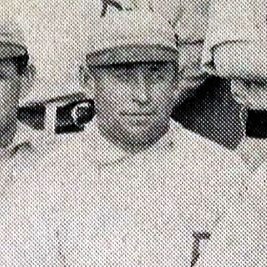
Pearce Chiles, an infielder/third base coach for the Philadelphia Phillies, was born in 1867 in Deepwater, Missouri. I think it’s fair to say he was an all-around no-goodnik – although thieving miscreant is probably more accurate. Phillies’ backup catcher Morgan Murphy, fellow no-goodnik, devised a system where Murphy, using binoculars, would stand beyond centerfield and steal the signs from the other team’s catcher. Murphy would forward the signs via a telegraph wire buried under the field and connected to a buzzer in the third base coaching box where Chiles stood. The buzzer would vibrate under Chiles’ foot, and he would signal to the batter what pitch was coming.  It was 1900.  

Pearce Chiles

Chiles never spoke publically about the scheme … but if he had …

Those idiots think the DTs ‘smaking my leg twitch.

It ain’t booze.

I hold my likker better ‘n any of ‘em.

Buffoons.

I can stand out here all day in this goddam third base box. And, see, we paid a guy to lay down a wire and it’s buried right here where my right foot stands. I have to stand just so. But, if I do, Murph’ out there just beyond that centerfield point, puts his spyglasses on the other guys’ catcher, and from out there he pushes a button and presto – I get a jolt of pure electricity right through the wire, right to my damn foot.

Mansfield OH News-Journal, 9/19/1900

Curve ball? Fast ball? Murph’s a catcher, he knows all the signs. I know from the buzz he sends me exactly what that pitcher’s gonna throw next.

One buzz, fastball. Two buzzes, something else.

Can you beat that? Continue reading

Some Things Should Stay The Same: 1857 Edition

Photo by Ylanite Koppens on Pexels.com

We’re taking a holiday sidetrack through 1857 today — from baseball to one of the most ubiquitous Christmas Carols.

On Christmas Day when I was a kid, my dad would take all the wrapped gifts marked for him and line them up in front of his chair. He would then randomly pick one and declare that it was the best of all. And, that was the gift he would open last. And, by last, I mean later in the day. Much later. Sometimes he would save that last gift until well into the evening when mom was already thinking about taking down the tree. (Mom usually had the Christmas tree stripped and down by lunchtime on the 26th.)

Throughout Christmas Day, my dad would ask if I had any more packages to open, and when I would sadly answer “no,” he would pick up his gift and say, “I still have one to open and it’s the best.”

The Baseball Bloggess grabbing for just one more gift.

So, stick with me because the best story I will tell you today will be the one I tell last.

First, baseball.

If you want to snoop through all the stories of baseball – or “base ball” or “base-ball” – in newspapers in 1857, it won’t take long. A couple dozen mentions are all you will find.

When this peculiar, relatively new game appears in Bloomington, Indiana in June 1857, the local paper reports:

“It is a lively and exciting game, with lots of exercise and fun in it. We hope it will speedily become popular here.”

It was, they said, a game for young men. And, with life expectancy hovering around 38 back then, pretty much everything was for young men. (Sorry, ladies, no baseball for you.) Continue reading

Paul Hines:  A Little More To Unspool

I warned you about this yesterday when I wrote:

“his story rolls out … like a 4 a.m. dream that unspools out of sequence.”

So, may I trouble you with just one more story about Paul Hines, the Virginia-born ballplayer who, in 1878, made baseball’s first unassisted triple play?

Providence Grays, 1882

Paul Hines

The story goes that President William McKinley became friends with Hines in the 1870s and later gave Hines his post-baseball job as the Department of Agriculture postmaster.

President William McKinley

But, aside from one mention in Hines’ 1935 obituary, I couldn’t confirm a connection between McKinley and Hines. That Associated Press obituary said they became pals when Hines first played for the Washington Nationals and McKinley was in Congress. But, Hines was long gone from DC and playing in Chicago when McKinley first came to Congress in 1877, so those years don’t jibe. Continue reading

Paul Hines, Baseball Player: The Unblurrification

It’s the first thing I do every morning. I feed the three cats. They are my top priority and the cats expect no less. I could do it in my sleep and I think, in a way, that’s sort of what I do.

“Feed us.”

Memories get old and, eventually, blurry. Like the minutes when you first wake up, there’s still some nighttime left in your head. Those weird 4 a.m. dreams haven’t quite disappeared. You’re not asleep, but you’re not quite awake. It’s still a little blurry.

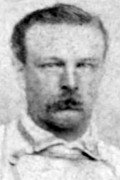
Paul Hines, baseball player, is like that. Blurry.

1890

It was a long time ago. There’s no video, no newsreels, no oral histories hidden away in boxes, no people left who saw him play.

And, that makes me wonder about the things that Paul Hines did. Did he really do them? And, if he did, why are people so focused on proving he didn’t?

I make my coffee only after the cats are fed. Often, coffee must wait so I can move the cat plates around so that Zuzu doesn’t push into Mookie’s plate before Mookie is through. I’m the cafeteria monitor. The cat-feteria monitor. Once the plates are reordered, then I make my coffee. That, too, I think I could do in my sleep.

The Unblurrification

Paul Hines was born in Virginia in 1855. Of the nearly 300 big leaguers born in Virginia, he was the first. Continue reading

100

Dear Baltimore Orioles,

Sure, we knew it was going to happen. You lost your 100th game last night, to the Detroit Tigers, the team with the worst record in baseball … even worse than yours.

But, look! You can lose a game (a game you coulda, shoulda won) by giving up a grand slam in the 12th and you’re still not the worst team in baseball.

So, there is that.

You were going to lose 100 games this season, we knew that all along. But, you stretched it out a bit this year. With two weeks left, you’ve already won more games then you did last season. Yay.

I guess.

Someone on Twitter noticed that today’s game – Baltimore Orioles at the Detroit Tigers – will mark the first time in American League history that two teams with 100 or more losses each will play each other.

So, see. You’re making history, too! Continue reading

“The Lost Ballplayers of Orange”: Sept. 30 at the Orange County Historical Society

This happened:

Not long ago, I was seated at dinner across from a college-aged pitcher. Making small talk’s not my thing, but I gave it a go. I asked him what he was studying. “History,” he said, between bites of food. “Interesting! What era of history is your specialty?” Maybe I was the first to ever ask him that. When you’re a pitcher, people are probably more interested in your fastball than in your class schedule. He thought for a moment and finally he said, “I like studying war.”

Welp.

I told him that I liked history, too, and that I often wrote about baseball history.

His eyes briefly grew big. And then he said, “Wow. I didn’t know you could do that.”

Then he went back to his dinner and that was the end of that.

I’m pretty sure he didn’t realize baseball even had a history worth knowing.

But it is worth knowing. Baseball’s long history provides a unique reflection of who we are as a nation, as a culture, as a society.

And, there’s plenty of baseball history right here in Virginia.

Join me, The Baseball Bloggess, on Monday, September 30 at the Orange County Historical Society in downtown Orange, Virginia. I’ll be talking about – what else? – baseball history …

160 Games: The Lost Ballplayers of Orange Continue reading